Types of Japanese Tea: Characteristics at a Glance
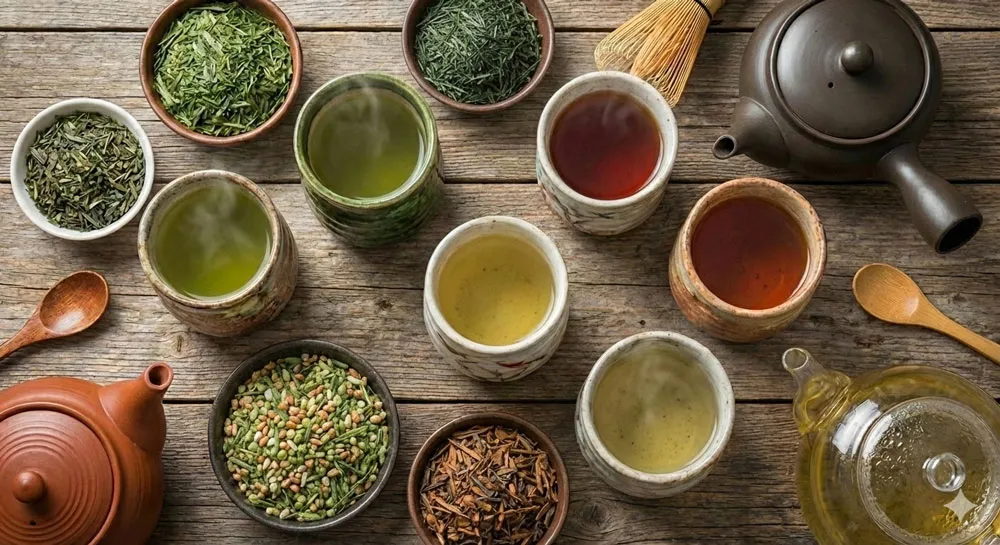
We carry a wide range of Japanese tea so you can explore its full character, starting with our signature sencha, we break down the differences in processing and flavor from a professional's perspective.
Sencha
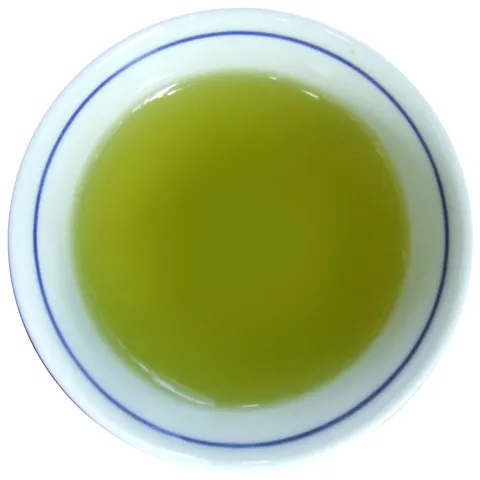 Liquor Color
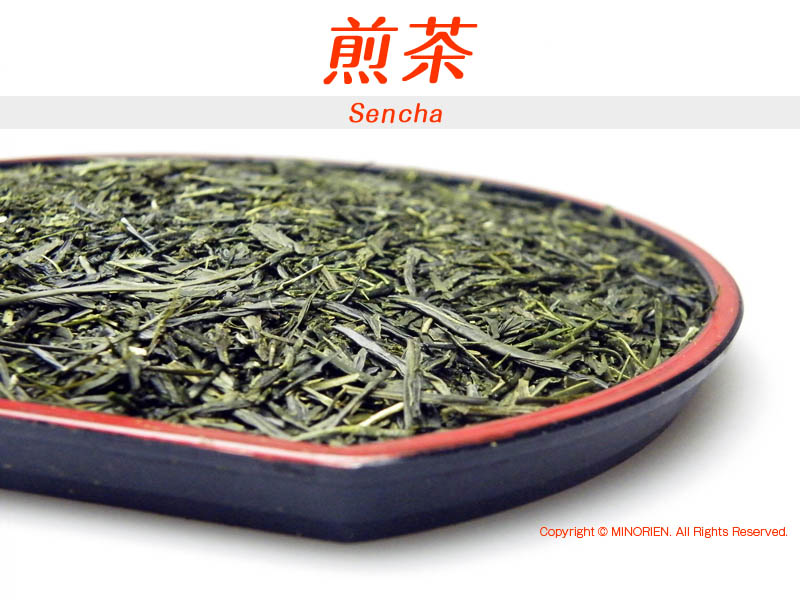 Leaf
Leaf
Japan's Best-Loved Everyday Tea
Sencha is the most widely produced tea in Japan. Its defining feature is the process: freshly picked leaves are steamed right away to halt oxidation, then rolled as they dry. This keeps the leaf's vivid green color intact and produces sencha's distinctive fresh aroma.
The finer the sencha, the more tightly the leaves curl into thin, needle-like shapes with a deep, glossy green sheen. The balance of sweetness (theanine) and astringency (catechins) makes for a flavor you never tire of, equally at home on the everyday table or served to an honored guest.
Fukamushicha
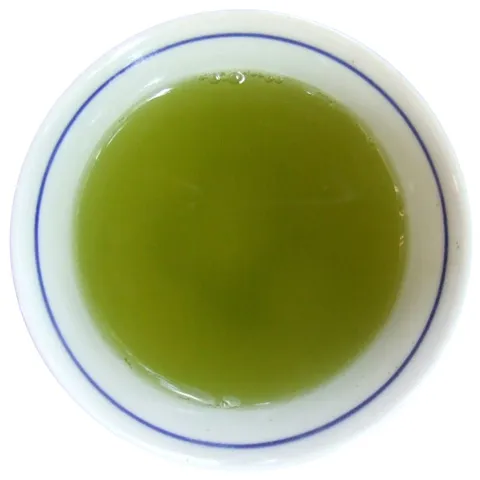 Liquor Color
 Leaf
Leaf
Our #1 Best-Seller: Rich, Mellow Depth
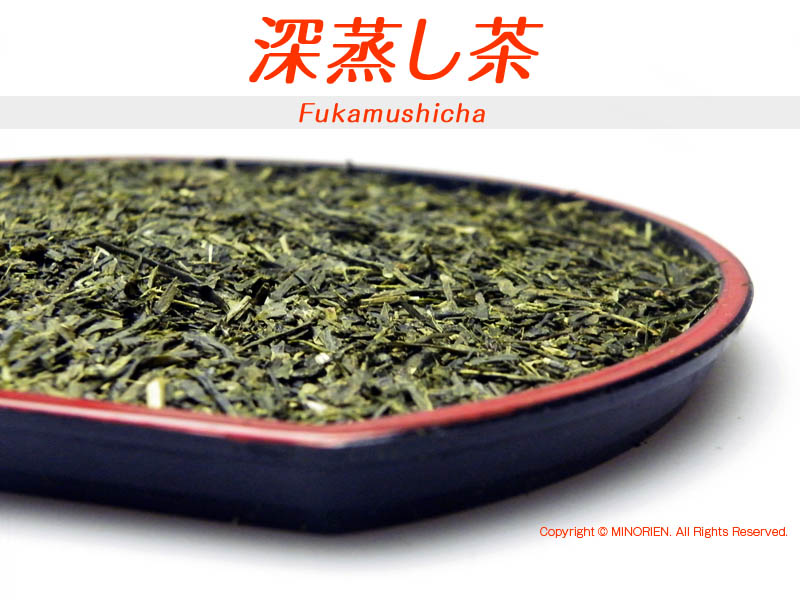
Fukamushicha ("deep-steamed tea") extends the initial steaming stage two to three times longer than standard sencha (which is steamed for 30–40 seconds), typically 60 to 120 seconds. The extended heat softens the leaf's fiber structure, breaking it into finer pieces, which lets its components extract far more readily.
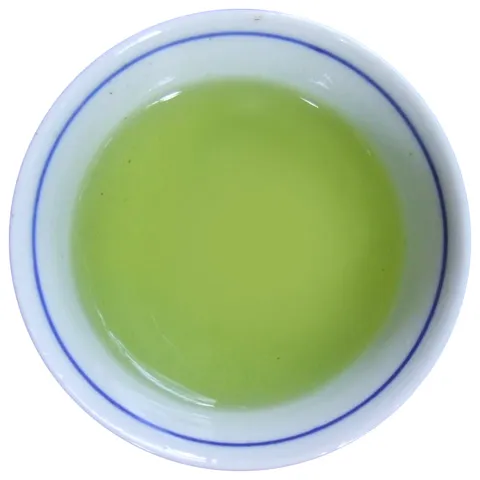
Its defining trait is the deep emerald-green liquor it produces. Because the fine leaf particles pass straight into the cup, you also take in insoluble fiber and beta-carotene that would otherwise be left behind. Astringency is gentle, sweetness syrupy, and the flavor has real substance, one of the most popular styles of Japanese tea today.
Gyokuro
 Liquor Color
 Leaf
Leaf
Japan's Most Labor-Intensive Premium Tea
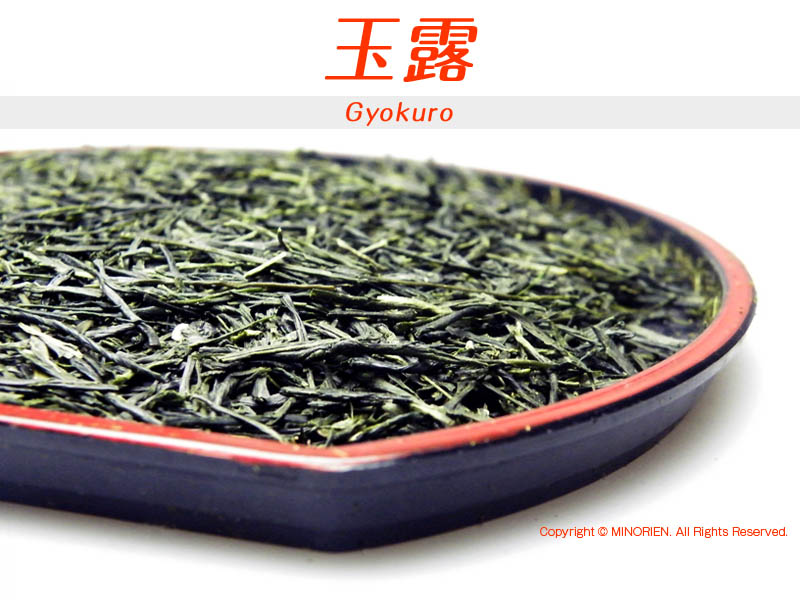
Roughly three weeks before harvest, gyokuro fields are covered to block direct sunlight. Suppressing photosynthesis this way prevents theanine — the tea's umami compound — from converting into catechins, the compounds behind astringency. The result is a broth-like umami, concentrated and deep.
Gyokuro is also known for ōika, a distinctive sweet aroma sometimes compared to nori seaweed, produced by the shading process. To bring out that aroma and umami fully, it's traditionally brewed slowly with water at a low temperature, around 50–60°C. A small amount goes a long way: think of it as the espresso of Japanese tea.
Genmaicha
 Liquor Color
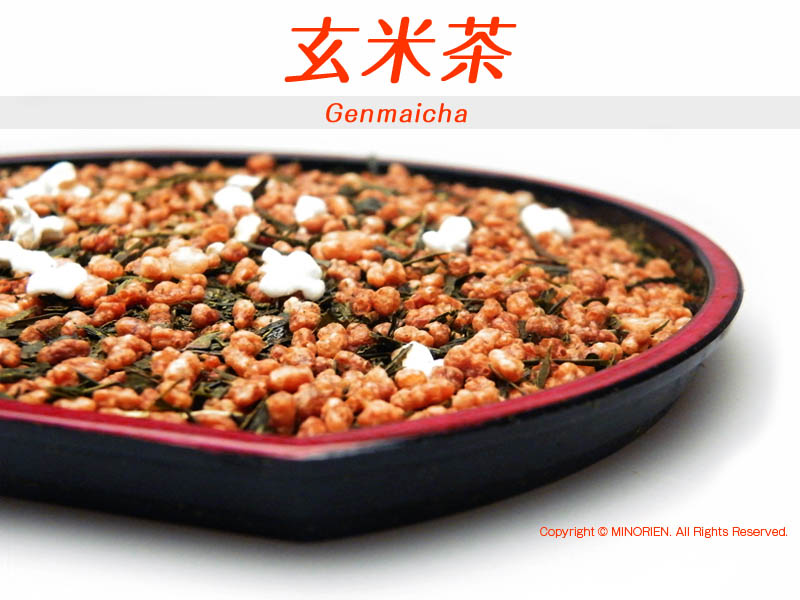 Leaf and Roasted Rice
Toasty Rice, Clean and Light
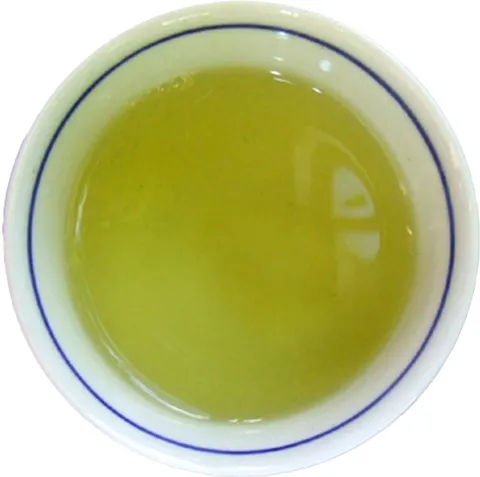
Rice is soaked, steamed, and roasted until golden brown, then blended with bancha or sencha to make genmaicha. You'll sometimes find puffed, popcorn-like kernels (called "tea flowers") mixed in. The appeal is having the toasty aroma of roasted rice and the clean, light character of green tea in a single cup.
Because roughly half the blend is rice rather than leaf, genmaicha has less caffeine than straight sencha. That makes it gentle on the stomach and suitable for children and older drinkers alike. Brewing it with hot water helps bring out its aroma fully.
Hojicha
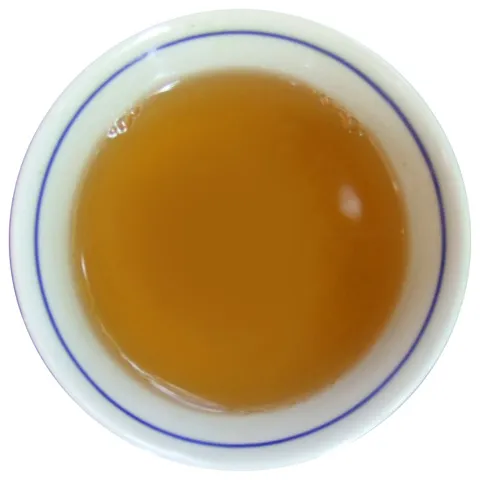 Liquor Color
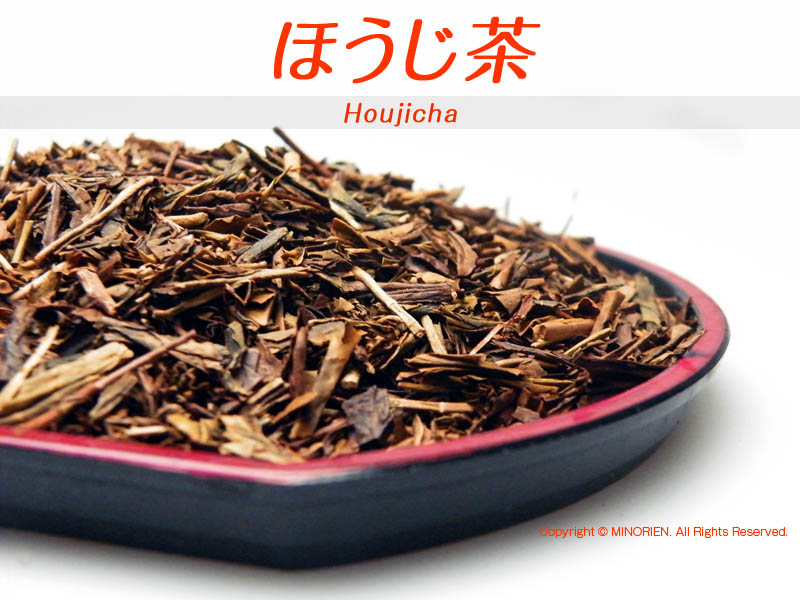 Leaf
Leaf
A Toasty Aroma, and Low in Caffeine
Sencha or bancha is roasted over high heat to bring out a distinctive toasty character. The aroma comes from a compound called pyrazine, said to have a relaxing effect on the brain. Roasting turns the leaf brown and produces hojicha's beautiful amber liquor.
High-heat roasting volatilizes some of the caffeine, giving hojicha a lighter character than sencha. It's gentle on the stomach, making it a good choice before bed, or as a palate cleanser after a rich meal.
Konacha
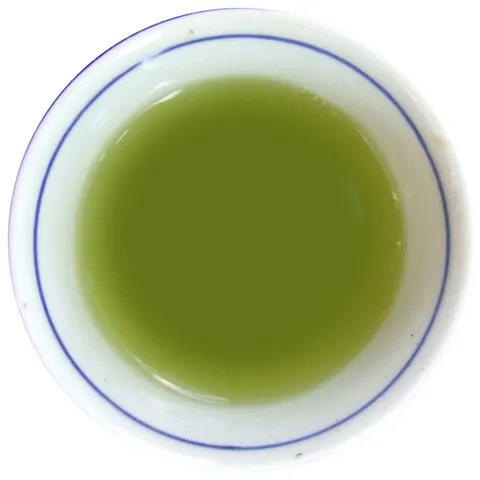 Liquor Color (Vivid Green)
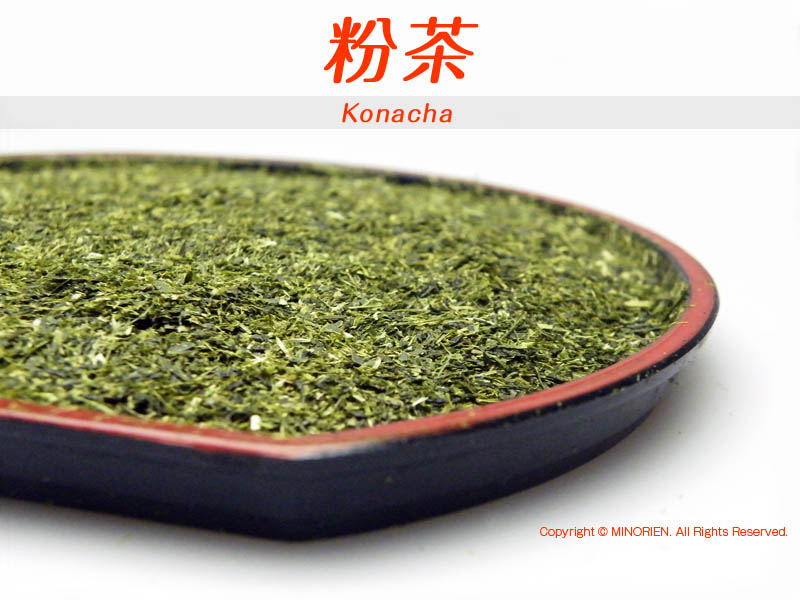 Leaf
Leaf
The Tea Sushi Restaurants Serve as "Agari"
Konacha is the fine, powder-like leaf sifted out during the processing of sencha or gyokuro. It's the concentrated tea traditionally served at sushi restaurants as agari. Because the particles are so fine, its compounds extract almost instantly once hot water is poured over it.
It's known for a vivid, deep green color and a bold, direct flavor. With catechins extracted in concentrated form, konacha works especially well as a palate cleanser after sushi or fried food. A fine-mesh strainer or teapot helps make the most of it.
Kukicha (Stem Tea)
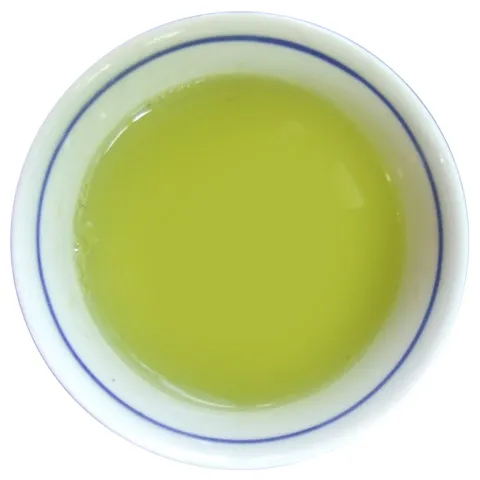 Liquor Color
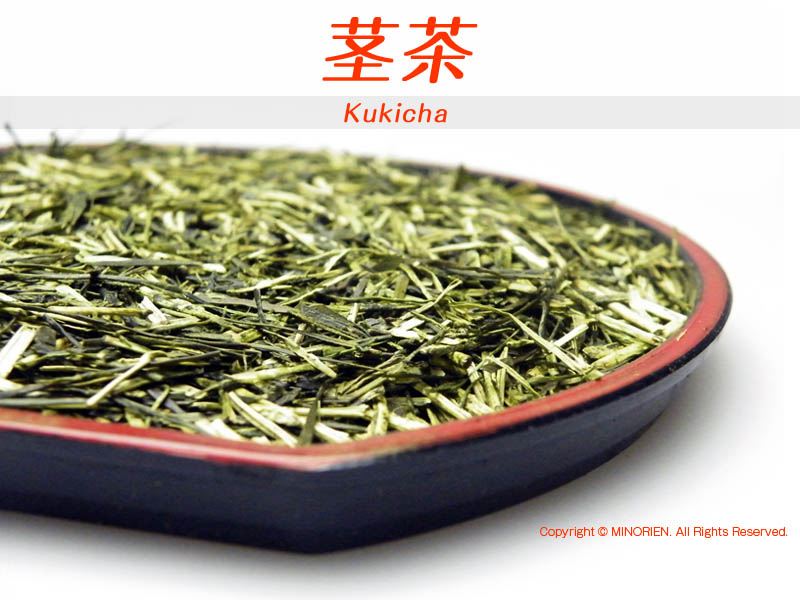 Leaf
Leaf
A Fresh Sweetness Only the Stem Provides
Kukicha is made from the stems and stalks sorted out during the finishing process. It might look like an odd mix at first glance, but stems actually contain more amino acids (theanine) than the leaf itself, giving kukicha a distinctive sweetness and a creamy quality.
It's also known for a young, grassy aroma, a hidden favorite among tea connoisseurs. Stems collected specifically from premium gyokuro are called karigane, and are especially prized. Since the flavor tends to fade after the first infusion, it's worth savoring that first cup's rich sweetness in particular.
Matcha
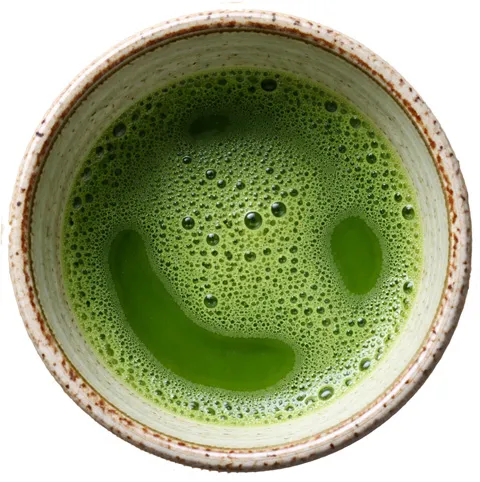 Liquor Color
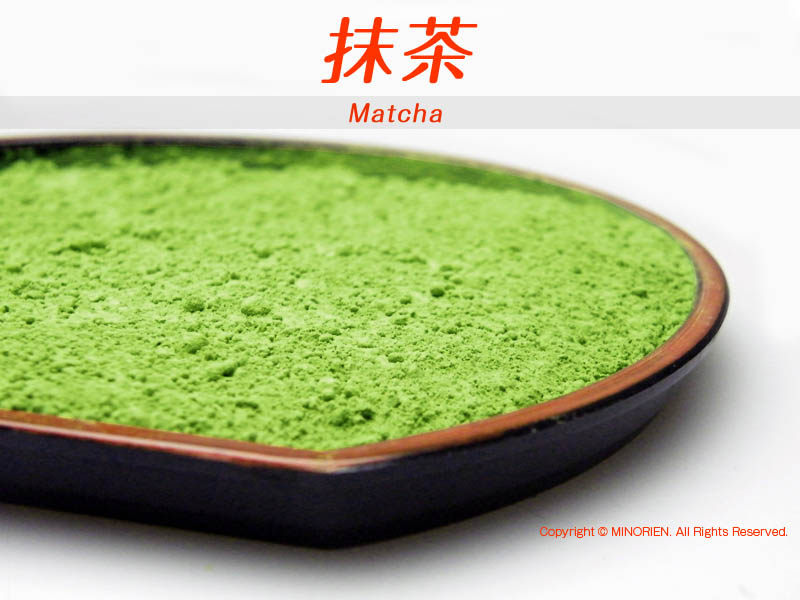 Matcha
A Japanese Tradition of Consuming the Whole Leaf
Matcha's raw material is tencha, leaves shade-grown just like gyokuro, blocked from direct sunlight. The leaves are dried without rolling, then ground into a fine powder on a stone mill. Beyond the tea ceremony, matcha has become a beloved ingredient in sweets and lattes around the world.
Its defining trait is that you consume the whole leaf itself, including fat-soluble nutrients like Vitamin E and dietary fiber that don't dissolve into hot water when steeped normally. The result is a mellow umami and an elegant aroma from the shading process.
Powdered Tea
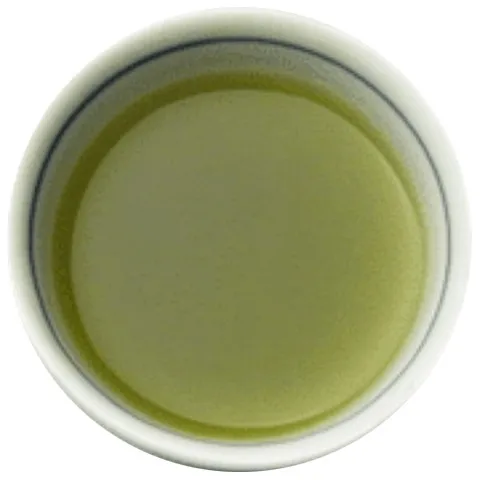 Liquor Color
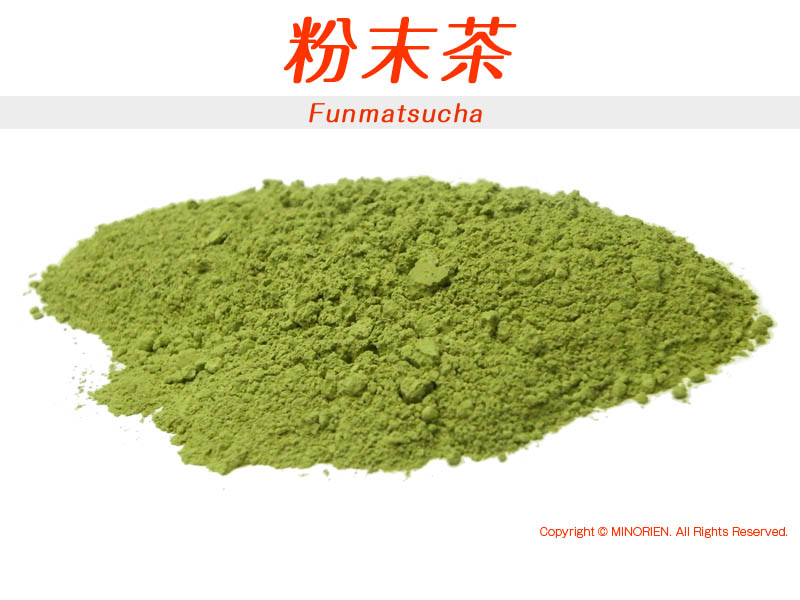 Powder
No Teapot Needed, Nutrients Intact
Powdered tea is made by finely grinding sencha or similar leaves into a powder, different from matcha, which starts from tencha rather than ordinary sencha. Just stir it into hot or cold water and you have a proper cup of tea, anywhere, anytime.
Beyond the convenience of no leftover leaf, powdered tea shares matcha's key advantage: you consume the whole leaf, so you take in 100% of its catechins and other nutrients. It's a handy option for busy mornings, at the office, or as an ingredient in baking or cooking.
Tea Bags
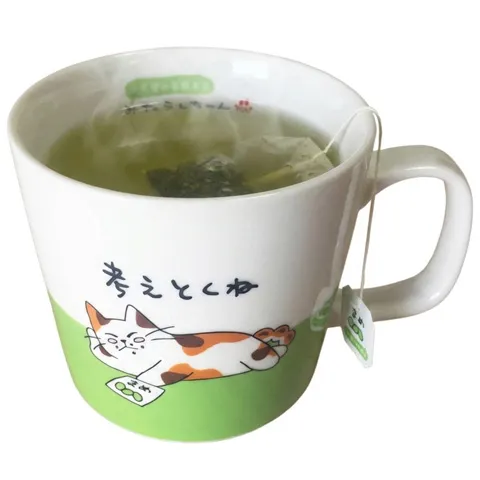
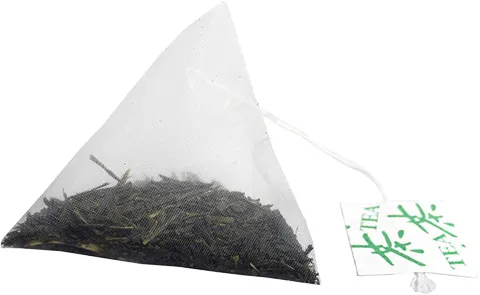
An Authentic Cup, No Teapot Required
Tea bags exist for the times you want good tea without brewing it in a pot. They used to carry a reputation for being a shortcut, but quality has improved dramatically in recent years.
Pyramid-shaped bags in particular give the leaves room to fully unfurl and "jump" once hot water is poured in. That extra space extracts flavor and aroma nearly as well as a proper teapot, ideal if you want good tea straight into a mug or travel bottle.
Wakocha
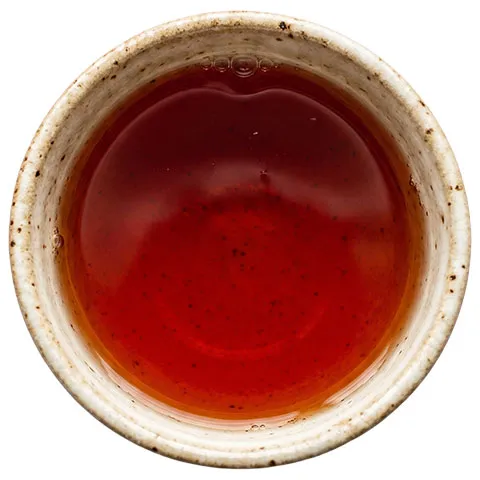 Liquor Color
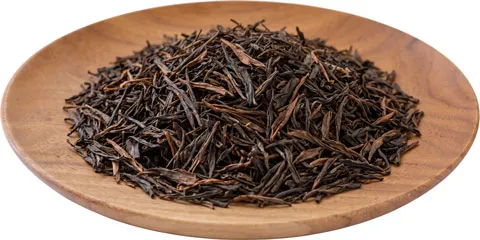 Leaf
Leaf
Low Astringency, Naturally Sweet Even Without Sugar
Wakocha is the general term for black tea grown and processed within Japan. Unlike black tea from India or Sri Lanka, wakocha is made to suit Japan's mild climate and soft water, its defining trait is low astringency and a natural sweetness that doesn't require sugar.
Shizuoka Prefecture in particular is known as the birthplace of wakocha. The morning and evening mist that settles over its mountains acts as a natural curtain, suppressing tannins (astringency) while preserving theanine (sweetness). The aroma also varies dramatically depending on the cultivar used — Yabukita, Benifuuki, and Kōshun among them — which is part of what makes wakocha so enjoyable to explore.
Other Teas Worth Knowing
Obukucha
A ceremonial tea enjoyed at New Year's for good health and fortune throughout the coming year. It's said to originate from ōbukucha, tea offered by the monk Kūya during the Heian period to help ward off an epidemic. It's typically made by adding a pickled plum and a knotted piece of kelp to sencha or genmaicha.
Benifuuki
A fragrant, rare cultivar descended from black-tea varieties. Its defining trait is a high concentration of methylated catechins, a compound of interest for seasonal allergy relief, making it especially popular in early spring, as a health-focused tea for the changing seasons.
Bancha
An everyday tea made from leaves picked later in the season, once they've grown tougher, or from larger leaves sorted out during processing. Low in caffeine, with a clean, light flavor, the kind of tea you can drink by the glassful, like water.
Kabusecha
A style that sits between gyokuro and sencha. Shaded from sunlight for a shorter period than gyokuro — roughly one to two weeks — giving it a balanced flavor that combines sencha's freshness with gyokuro's sweetness and vivid green color.
Tamaryokucha (Guricha)
Finished without the final rolling step ("seiju") that straightens most sencha into needle-like strands, giving the leaf a curled, comma-like shape instead. Low in astringency with a mellow flavor, and produced mainly in Kyushu (including Ureshino tea).
Organic Tea
Tea grown in soil free of pesticides and chemical fertilizer for at least three years. Only tea certified under Japan's national Organic JAS standard can be labeled "organic." A bold, natural flavor and the peace of mind that comes with it.
Mecha (Bud Tea)
Made from just the curled, tender tips of the buds, sorted out during finishing. This is where the plant's vitality is concentrated, so its compounds are especially dense. Known for a rich, bold flavor and a vivid green color.
Explore Japanese tea more deeply, and more enjoyably.
Sencha, fukamushicha, gyokuro... which one is right for you?
We've put together a guide to choosing with confidence, by region, type, and price (Japanese).
 Shop
Shop