As a Shizuoka tea specialty shop, we brew tea every single day. What that experience has taught us is this: focus on just three things — water temperature, leaf amount, and steeping time — and the same leaves can taste dramatically different.
It's simpler than it sounds. On this page, based on how we actually brew tea at Minorien, we'll walk through the basic steps, a quick-reference chart by tea type, and tips for cold brewing and storage.
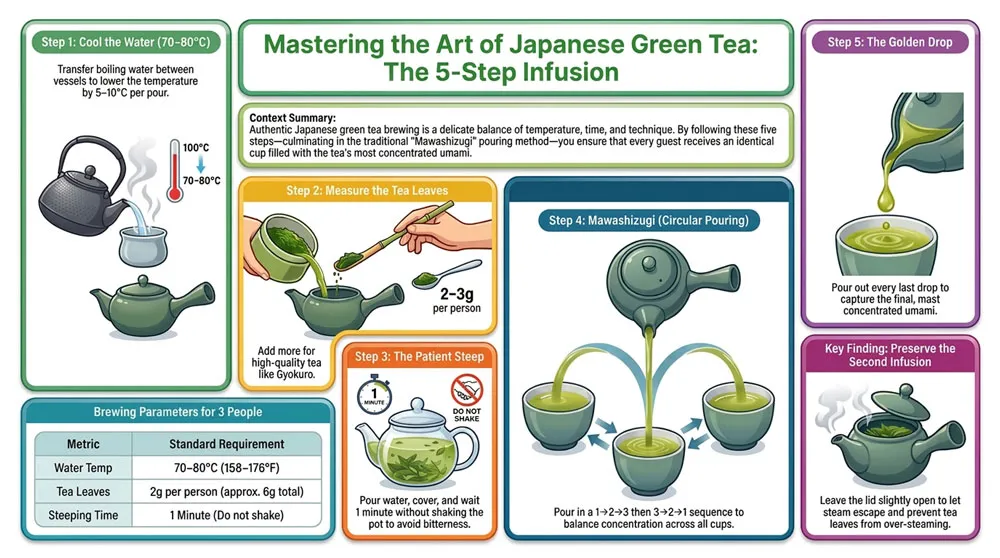
The Basics: 5 Steps
1
Cool the water Pour boiling water into a cooling vessel (yuzamashi) or a rice bowl. Each transfer drops the temperature by 5–10°C. Adjust until you reach your target temperature.
2
Measure the leaves Add the leaves to your teapot. A good guideline is one teaspoon (2–3g) per person, a little more for premium teas like gyokuro.
3
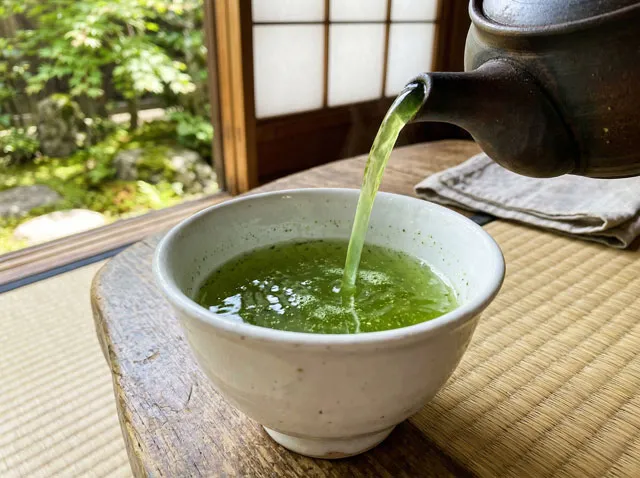
Pour and steep Pour the water at the right temperature into the pot, cover it, and wait quietly. Never shake the pot, it releases unwanted bitterness.
4
Pour in rounds (mawashi-tsugi) When filling multiple cups, pour a little into each in order 1→2→3, then reverse and pour 3→2→1, so every cup ends up the same strength and amount.
5
Pour to the "golden drop" The final drop left in the pot holds concentrated umami. Pouring it out fully also removes leftover moisture, so the second infusion tastes better too. Once you're done, crack the lid open to let the heat escape.
Quick Reference by Tea Type (per serving)
Adjusting temperature and time to match each leaf's character is the single biggest key to a great cup.
Gyokuro
Water Temp
50–60°C
Steep Time
2–2.5 min
Leaves
3g
A slow, low-temperature steep draws out intense umami. Low in catechins (astringency), giving a mellow, sweet cup.
Premium Sencha
Water Temp
70–75°C
Steep Time
1.5–2 min
Leaves
2–3g
An elegant balance of umami and bright astringency. Slightly lower temperatures bring out the fine aroma.
Sencha / Kukicha
Water Temp
80–90°C
Steep Time
1 min
Leaves
2–3g
A crisp aroma with clean astringency. For the second infusion, use slightly hotter water and pour quickly.
Fukamushicha
Water Temp
75–80°C
Steep Time
30–45 sec
Leaves
2g
The fine leaf particles extract quickly into a rich cup. Oversteeping brings out astringency, so watch the clock. Our best-selling tea.
Hojicha
Water Temp
95–100°C
Steep Time
30 sec
Leaves
3–5g
Its toasty aroma only fully blooms with boiling water. Low temperatures won't bring out the fragrance, so always use hot water.
Genmaicha
Water Temp
90–100°C
Steep Time
15–30 sec
Leaves
3–5g
High heat brings out the toasted rice's aroma. Even a short steep is enough to release its full fragrance.
Konacha
Water Temp
70–80°C
Steep Time
1 min
Leaves
2–3g
Fine loose-leaf tea produced during sencha processing. Brewed the same way as sencha, in a teapot with a fine mesh strainer.
Powdered Tea
Water Temp
Any
Steep Time
Instant
Leaves
1–2g
Whole leaves ground into powder, so no teapot is needed — just stir into water or hot water. Different from konacha above.
Leaf amount, water temperature, and steeping time are only guidelines. A shorter steep brings out aroma; a longer one adds richness and mellowness. Adjust to your own taste.
The Appeal of Cold-Brew Green Tea
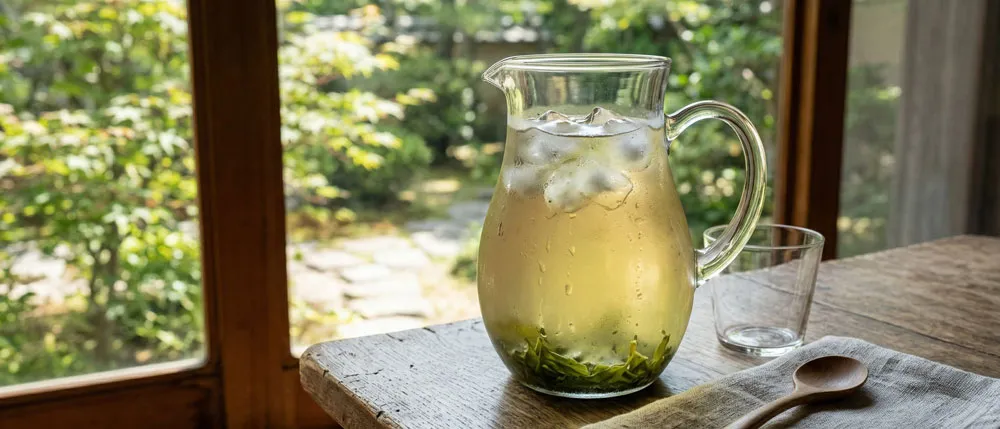
Brewing at low temperature produces a completely different balance of compounds and benefits than hot brewing. Catechins and caffeine (astringency) dissolve poorly in cold water, while theanine (umami) still dissolves readily even when cold, so you get sweetness without the bitterness. Ice-brewing is even said to cut caffeine by roughly 75% compared to hot brewing, while efficiently drawing out EGC, a compound linked to immune support.
💧 Quick recipe: A good starting ratio is 10g of leaves per 500ml of water. Steep in the refrigerator for 4–6 hours.
For the golden ratio of leaves to water, an ice-only method, and the difference between cold-brew and ice-brew, see our full guide (Japanese).
Tea leaves are highly sensitive to five things — moisture, oxygen, light, heat, and odor — and degrade in flavor and color when exposed to them.
💧
Moisture
Absorbs water and rapidly accelerates oxidation and mold growth.
🌬️
Oxygen
Oxidizes and breaks down catechins and vitamin C, dulling the flavor.
☀️
Light
Breaks down chlorophyll, turning the leaves brown.
🌡️
Heat
Speeds up oxidation, hastening the loss of aroma and flavor.
👃
Odor
Highly absorbent, leaves readily pick up smells from nearby food or detergent.
✅ The basics: Store in an airtight, light-blocking tea canister in a cool, dark place. Once opened, aim to finish within 2 weeks to a month, 2 months at the absolute latest.
🧊 A note on the fridge/freezer: Fine for unopened bags, but an opened one risks absorbing odors from other food. Condensation forms if you open a bag straight out of the cold, damaging the leaves, so always let it return to room temperature before opening.
Second Life: Ideas for Old Tea Leaves
Even leaves past their best — expired or gone flat in flavor — don't have to be thrown away.
🍵 Homemade Hojicha
Roast the leaves in a pan over low heat for a few minutes, watching closely so they don't burn, and they're reborn as fragrant hojicha, a Maillard-reaction transformation.
🧹 Deodorizer / Dehumidifier
Put dried leaves in a tea bag and use them to freshen the fridge, shoe cabinet, or microwave. Effective for 1–2 months.
🧽 Cleaning & Disinfecting
Scattering damp leaves on tatami before sweeping helps trap dust. A strong brew can also be used for wiping down surfaces, with some antibacterial benefit from catechins.
🍳 In Cooking
Add to simmered fish to cut the smell, use in the parboiling water for meat to tenderize it, or grind finely into "tea salt", the uses are wide-ranging.
🛁 Bath Soak
Float a cloth bag of leaves in the bath for the relaxing and skin-soothing benefits of catechins.
🌱 Garden Fertilizer
Fully dried spent leaves can also be returned to the soil as a nitrogen source for houseplants or a home vegetable garden.
📖 Want to Go Deeper?
Why those specific temperatures and times work best, and how water quality and teaware shape the flavor, explained from a more scientific angle below.
Over 99% of a cup of tea is water. The quality of the water you use has an outsized effect on flavor and aroma.
✓ Soft water (hardness 30–80mg/L) ← Best for Japanese tea
This describes Japanese tap water and most domestic mineral water. Umami, astringency, and bitterness dissolve out in an ideal balance, letting the tea's true aroma shine.
△ Hard water (hardness 120mg/L+)
Typical of many European mineral waters. Calcium and magnesium bind with catechins, muting bitterness and astringency, but the liquor darkens and delicate aroma is lost.
💡 Removing chlorine from tap water: After boiling, keep it at a gentle boil with the lid off for 3–5 minutes, and the volatile chlorine compounds behind that "tap water" smell will fully evaporate. Be careful not to overdo it, though, boiling too long strips dissolved oxygen from the water and dulls how the tea's aroma opens up. Letting water sit for 4–5 hours, or using a water filter, works just as well.
Why Temperature Matters
Tea's compounds dissolve out at very different rates depending on the water temperature.
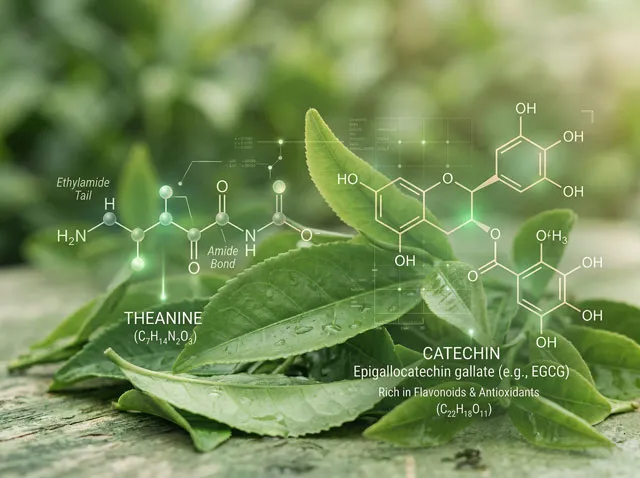
Theanine (umami, sweetness)
Dissolves readily starting from low temperatures (40°C+), reaching nearly 100% extraction by 100°C. An amino acid that boosts alpha brain waves for a relaxed state, and gently tempers caffeine's stimulant effect.
Catechins & caffeine (astringency, bitterness)
A "delayed, high-temperature" compound: extraction accelerates sharply above 80°C, but barely dissolves at low temperatures, so brewing cool keeps bitterness and astringency well in check.
💡 The basic rule of temperature: for pure umami alone, go low (50–60°C); for a balance of aroma and astringency, go medium (70–80°C); to maximize a toasty character, go hot (95–100°C). Aroma compounds like cis-3-hexenol and linalool also volatilize more readily at higher temperatures. → Learn more about the aroma of Japanese tea
How Teaware Material Changes the Taste
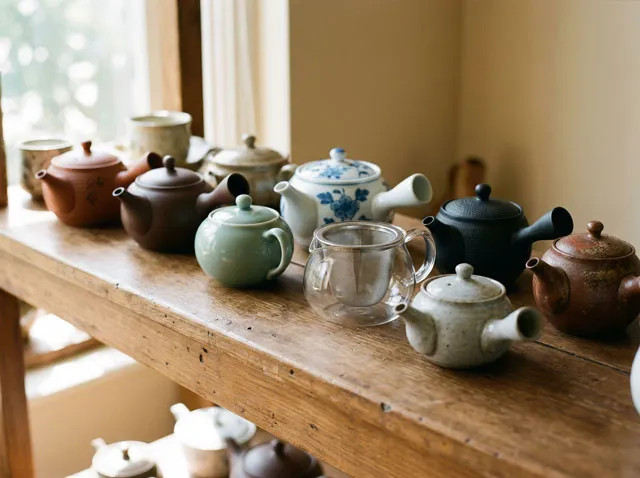
🏺 Unglazed stoneware (e.g. Tokoname ware) ← Best for Japanese tea
The iron oxide in the clay reacts with the tannins in tea, softening bitterness and astringency. The porous surface also absorbs excess off-flavors. Among Japanese tea instructors, Tokoname-ware brewed tea is often said to have stronger umami.
※The more you use a pot, the more the tea's character seeps into it, deepening the flavor over time.
🥛 Porcelain & glass ← Best for tasting and delicate aromas
A glassy, chemically neutral surface. Extracts the leaf's true aroma and color directly, without altering them at all. Ideal for tasting or for delicate, aromatic teas, and easy to clean.
💡 The shape of the pot matters too: a handle-less "hōhin" is designed to let you feel the vessel's temperature directly in your palm, making it purpose-built for the low-temperature (50–60°C) brewing that gyokuro and premium sencha need. A "yuzamashi" (cooling vessel) is a precision tool for temperature control, each time you pour water from one vessel to another, it drops by 5–10°C. For more, see Choosing a Teapot (Japanese).
 Shop
Shop