The Aroma of Japanese Tea
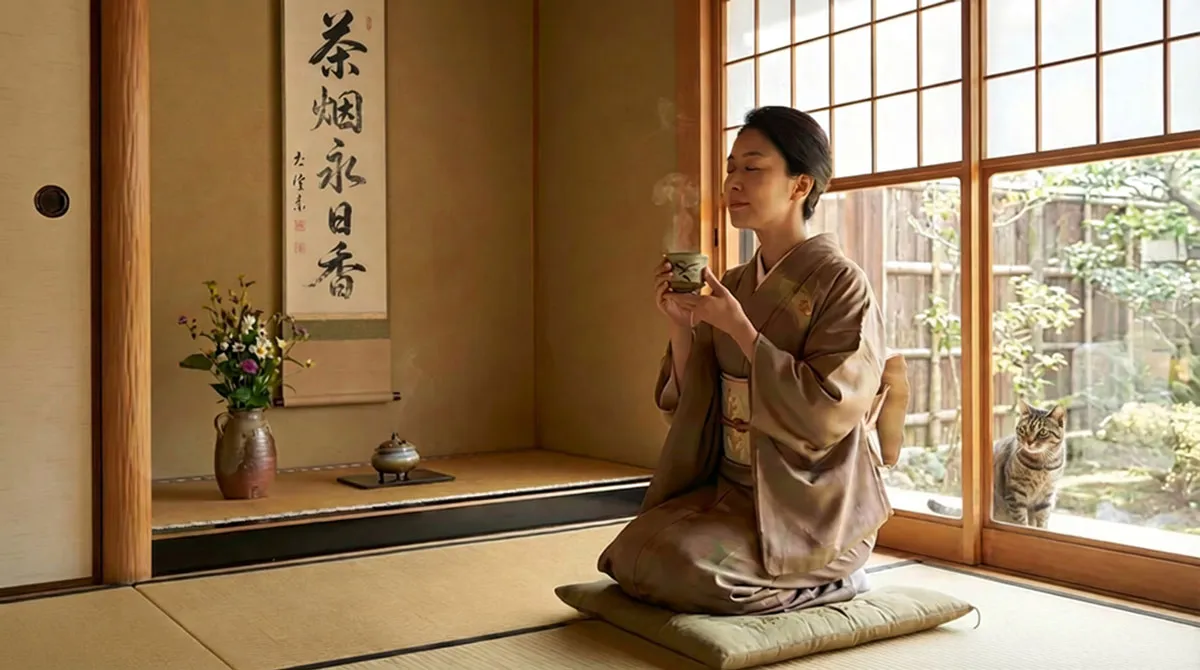
"Tea smoke, lingering all day, filling the air with scent" — a line of classical Chinese poetry on the quiet pleasure of a room filled with the aroma of tea
That fresh, faintly nostalgic scent that rises the moment you brew Japanese tea. Scientific studies have identified hundreds of volatile aroma compounds in green tea, many of which contribute to its complex character. The aroma of tea isn't simply a "smell" — it's shaped by how the leaf was grown, the chemical changes that happen during processing, the skill of the artisan who fires the leaves, and the temperature of the water used to brew it.
There Are Two Ways We Smell Aroma: Why Retronasal Aroma Matters
The aroma that shapes how "delicious" a tea tastes actually reaches your brain by two different routes.
- Orthonasal aroma: the scent that rises from the cup and reaches your nose directly.
- Retronasal aroma: the scent that travels from the back of your throat up to your nose the moment you swallow.
Freshly brewed tea can deliver a more vivid aroma experience than bottled tea, in part because more volatile compounds reach the nose during drinking.
Two Chemical Pathways Behind Tea's Aroma
Tea's aroma isn't simply present in the freshly picked leaf from the start. It largely forms through two pathways.
1. Oxidative breakdown of lipids (the fresh scent of young leaves)
During harvesting and processing, enzymes such as lipoxygenase break down fatty acids in the leaf, such as linolenic acid, generating volatile compounds associated with fresh, green aromas, including cis-3-hexenol.
2. Hydrolysis of glycosides (sweet, floral notes)
Floral compounds like linalool and geraniol exist in the fresh leaf bound to sugar molecules as odorless "glycosides." During processing, enzymes cleave the sugar away, releasing the volatile compounds that contribute to the tea's floral aroma.
In oolong and black tea in particular, a step called withering deliberately lets the leaves wilt, encouraging this enzymatic reaction and drawing out floral, fruity notes.
The Natural Aroma Compounds in Tea Leaves
Here are three of the compounds that define tea's characteristic aroma.
- ● Cis-3-hexenol ("leaf alcohol" — a fresh, green scent)
- A distinctly plant-like, "green" aroma. It carries the refreshing quality of a freshly picked, dewy young shoot, and is often seen as a marker of a Japanese tea's freshness. It's an important contributor to the fresh, green aroma often associated with tea.
- ● Linalool (a gentle floral scent)
- Also found in lily of the valley and lavender, this compound gives tea an elegant floral quality. It's an important contributor to the floral aroma found in many Japanese teas, and can leave a graceful lingering note.
- ● Geraniol (a sweet, rose-like scent)
- Also a key component of rose oil, geraniol adds depth and a rounded sweetness to tea's aroma.
Teas grown under shade before harvest, such as gyokuro and kabusecha, develop a distinctive nori-like scent called ooika ("covering aroma"), produced by a compound called dimethyl sulfide. It's particularly characteristic of shaded teas, and is often associated with premium Japanese tea.
The Artisan's Craft: "Hika," the Roasted Aroma
Beyond the natural aroma of the fresh leaf, Japanese tea has another crucial layer of scent: hika, the roasted aroma created during the final stage of processing, firing (drying).
As a skilled artisan judges the leaf and applies heat, the amino acids and sugars in the leaf react (the amino-carbonyl reaction), generating a wide range of new aroma compounds, including pyrazines and pyrroles, with toasty, sweet character.
Premium sencha in particular calls for carefully controlled heat during this final firing stage, to clear away any green, raw notes while drawing out a mellow, refreshingly roasted aroma.
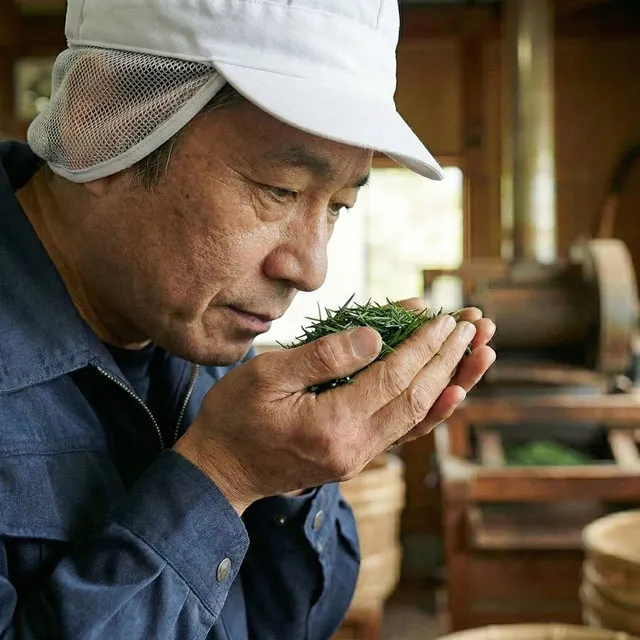
Curious what that high-elevation mountain aroma actually tastes like? Here's one example.
A Crisp "Mountain Aroma" the World Has Recognized: Gokunou
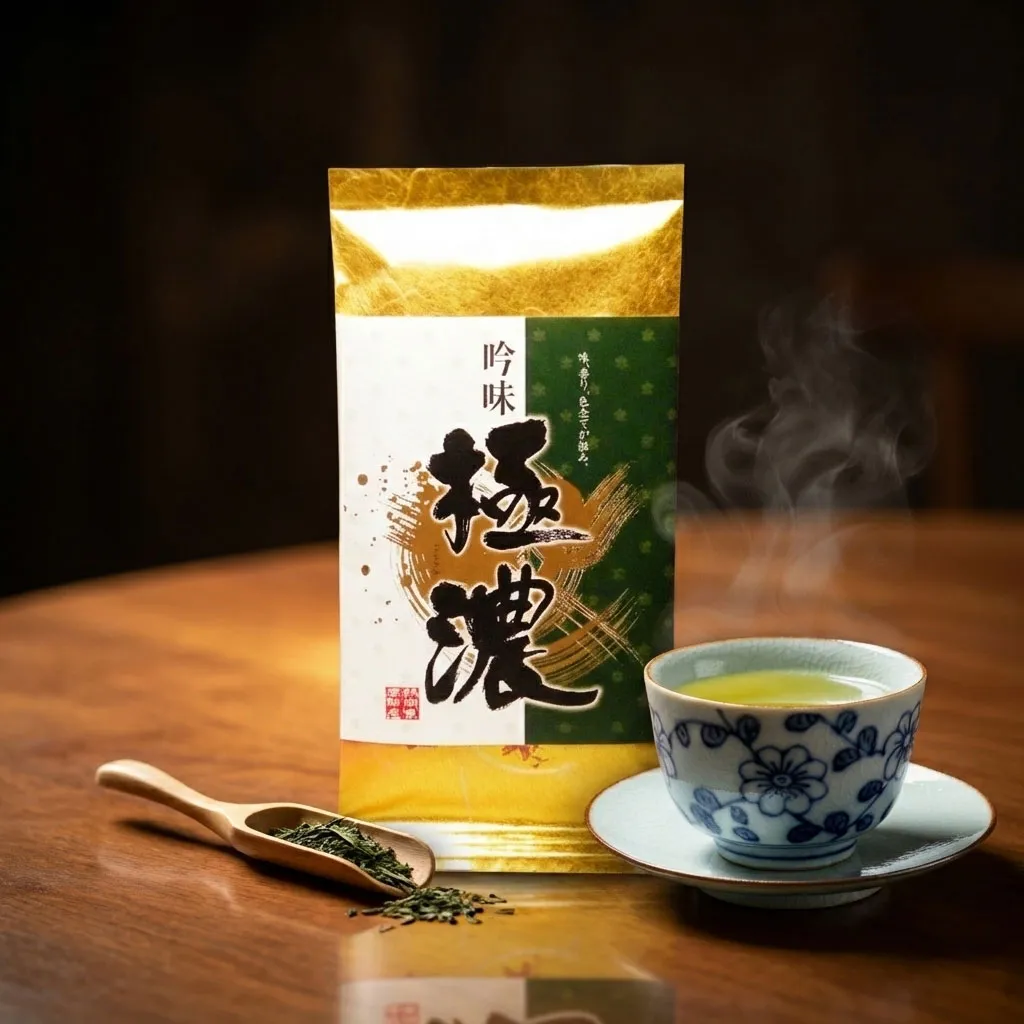
See the "Gokunou" product page (Japanese) >
Where deep-steamed tea (fukamushicha) is prized for its body, "Gokunou" — a lightly steamed sencha — represents the opposite pursuit: tea's aroma, taken to its furthest extreme.
Gokunou is grown at Haruno Ikkyuen, a tea garden 500–600 meters above sea level in Haruno, Hamamatsu City, Shizuoka Prefecture, which won the top gold award at the 2007 World Green Tea Contest. Morning mist and sharp temperature swings between day and night in this mountainous terrain give the leaf a distinctive mountain aroma that reflects its high-elevation growing environment.
Rather than deep-steaming, it's finished with the traditional light-steaming method, preserving the leaf's natural aroma compounds intact. The moment hot water touches the fine, needle-shaped leaves, an elegant fragrance fills the room — a genuinely premium experience.
Tea Type and Its Signature Aroma Compounds
The character of a tea's aroma changes dramatically depending on the degree of oxidation and the growing method.
Sencha (a youthful aroma)
(a refreshing "green" scent)
(lily of the valley, rose)
(a sweet, toasty aroma reminiscent of caramel or honey)
Matcha (a harmony of three aromas)
(a trio of young-grass bitterness, nutty toastiness, and a sweet finish)
(a rich, nori-like umami scent from shade cultivation)
Kukicha, or stem tea (an aroma treasure trove)
(floral aroma can be particularly noticeable in stem tea)
(toastiness that stands out after roasting)
Gyokuro (the covering scent)
(the "ooika" scent from shade cultivation)
(a deep, broth-like character, alongside the aroma above)
Hojicha (a comforting roasted aroma)
(a roasted aroma often associated with comfort and relaxation)
(from the heat reaction between amino acids and sugars)
Oolong Tea (floral and fruity notes)
(produced through oxidation and repeated shaking and resting of the leaves during processing, called yaoqing)
(a rich, honey-like sweetness)
Black Tea (a soothing aroma)
(a rich aroma produced through full oxidation)
Aroma's Five Enemies, and How Long Tea Keeps
Even a wonderful aroma can be ruined by poor storage. These five factors deserve particular attention.
Speeds up deterioration
Aroma escapes
Causes discoloration
Degrades flavor
Picks up other smells
How Long to Keep It
Once opened, tea gradually oxidizes. For the best aroma, many people prefer to finish opened tea within about two weeks in summer, or about a month in winter — this is a guideline for aroma quality, not a food-safety expiration date.
A Note on Refrigerator Storage
A refrigerator or freezer can work well for long-term storage, but condensation when taking tea in and out is the biggest threat to its aroma. Once tea comes out of the fridge, don't open the package until it has fully returned to room temperature. For tea you expect to finish within a few weeks, a well-sealed canister in a cool, dark place is usually the simplest option.
More Than Just a Drink: Filling a Room With Tea's Aroma Using a Chakouro
Have you heard of a chakouro (tea aroma burner)? Much like an aroma pot, it gently heats tea leaves from below — with a candle or an electric heater — releasing their scent throughout a room.
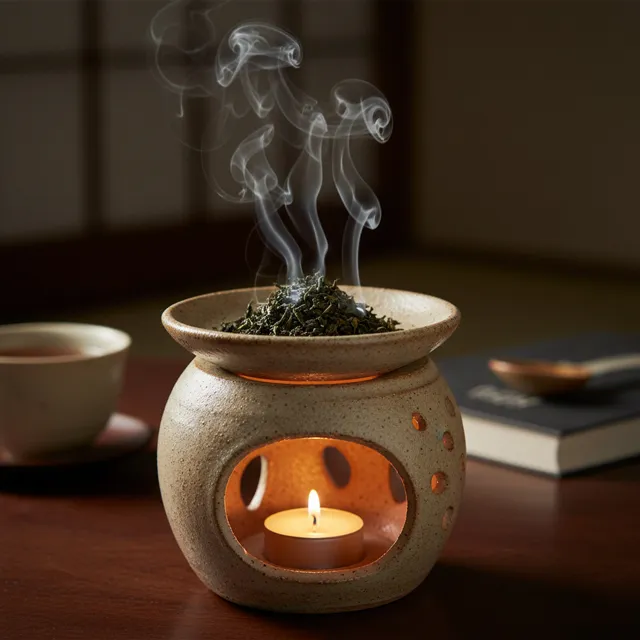
- ●A pleasant aroma that refreshes the room:
The warm, roasted aroma of tea leaves can gently fill a room. - ●A second life for leftover leaves:
Older tea leaves that are still clean and dry can be put to good use this way.
Best suited for:
Kukicha (karigane) and hojicha in particular release their aroma readily and work especially well. As long as they don't scorch, the leaves can even be brewed afterward as a homemade hojicha.
Brewing Tips to Bring Out the Aroma
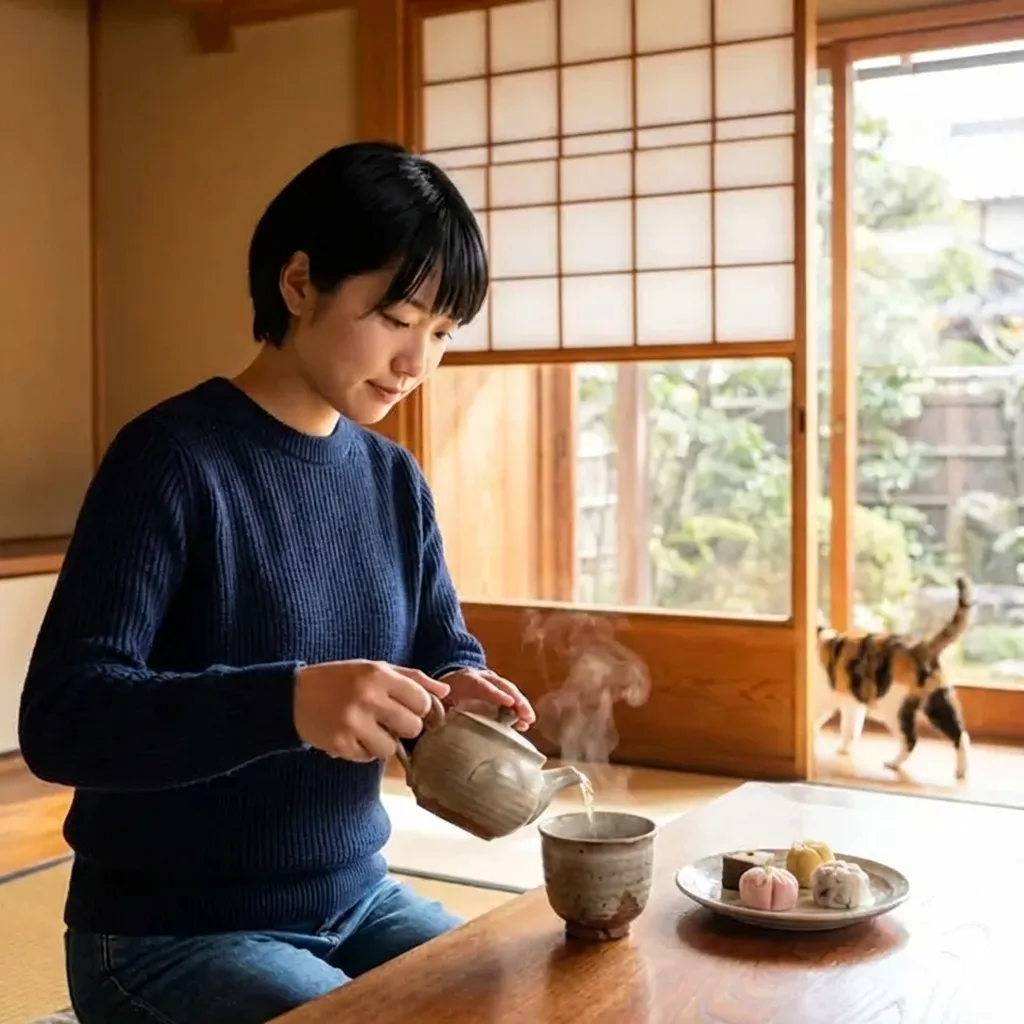
Higher temperatures can release more volatile aroma compounds, but they also change the balance of aromas. Lower temperatures are often used for sencha and gyokuro to preserve delicate floral notes while bringing out umami. Try adjusting the water temperature to match your mood.
-
Brewed with boiling water (95°C+)
Hojicha, genmaicha, kukicha (karigane), and similar teas (Japanese product pages).
Sharp, toasty notes from compounds like pyrazine come through boldly — ideal when you want a refreshing lift. The aroma fills the whole room. -
Brewed slightly cooled (70–80°C)
Premium sencha, Gokunou, and similar teas (Japanese product pages).
Delicate floral notes like linalool come through more gently at lower temperatures than in boiling water — good for a calm moment paired with rich umami. - Cold-brewed The aroma is more muted, but the cool, crisp character of cis-3-hexenol, which doesn't volatilize as readily in hot water, stands out.
Want to experience these aromas for yourself?
Explore our sencha, hojicha, genmaicha, and other Japanese teas.
Browse Our Teas >Want to go deeper into the world of Japanese tea?
Our glossary of tea terms is a great place to look up terms in more detail.
Browse the Tea Glossary >· Published research on volatile aroma compounds in tea, including cis-3-hexenol and its role in green tea aroma
· Published research on dimethyl sulfide and the aroma of gyokuro and other shaded teas
· Published research on aroma formation during tea processing, including firing (hika)
· Public information from the Japan Tea Central Public Interest Incorporated Association (Nihon-cha Chuo-kai)
Note: This article draws on the public information and research cited above, compiled and contextualized by the Minorien editorial team. Some claims about specific cultivars or products reflect general knowledge from our work as a specialty retailer, not laboratory analysis of individual products.
 Shop
Shop