Green Tea Components|Catechin, Caffeine & Theanine Explained
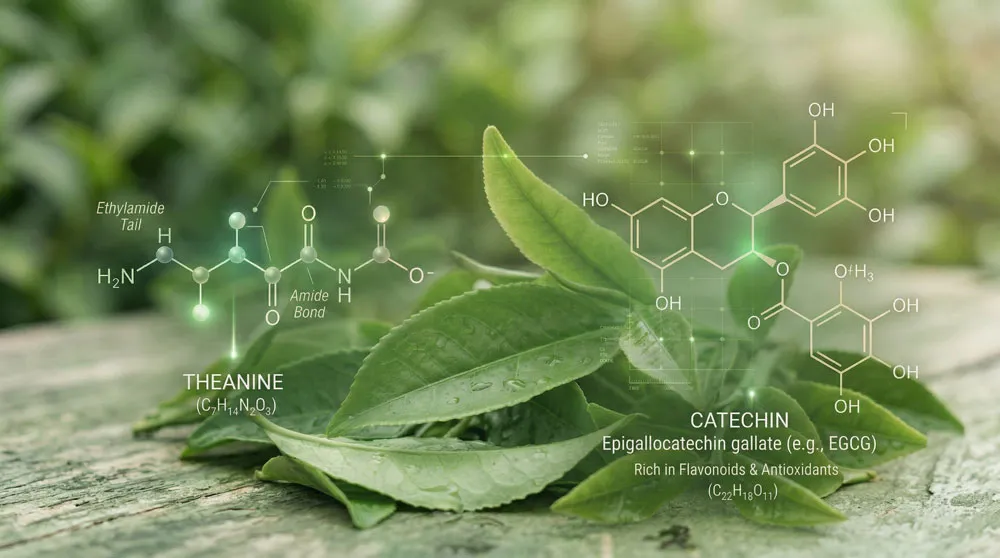
There's a real reason a cup of tea can leave you feeling either relaxed or refreshed. The flavor and character of green tea comes down mainly to three compounds: catechins, caffeine, and theanine.
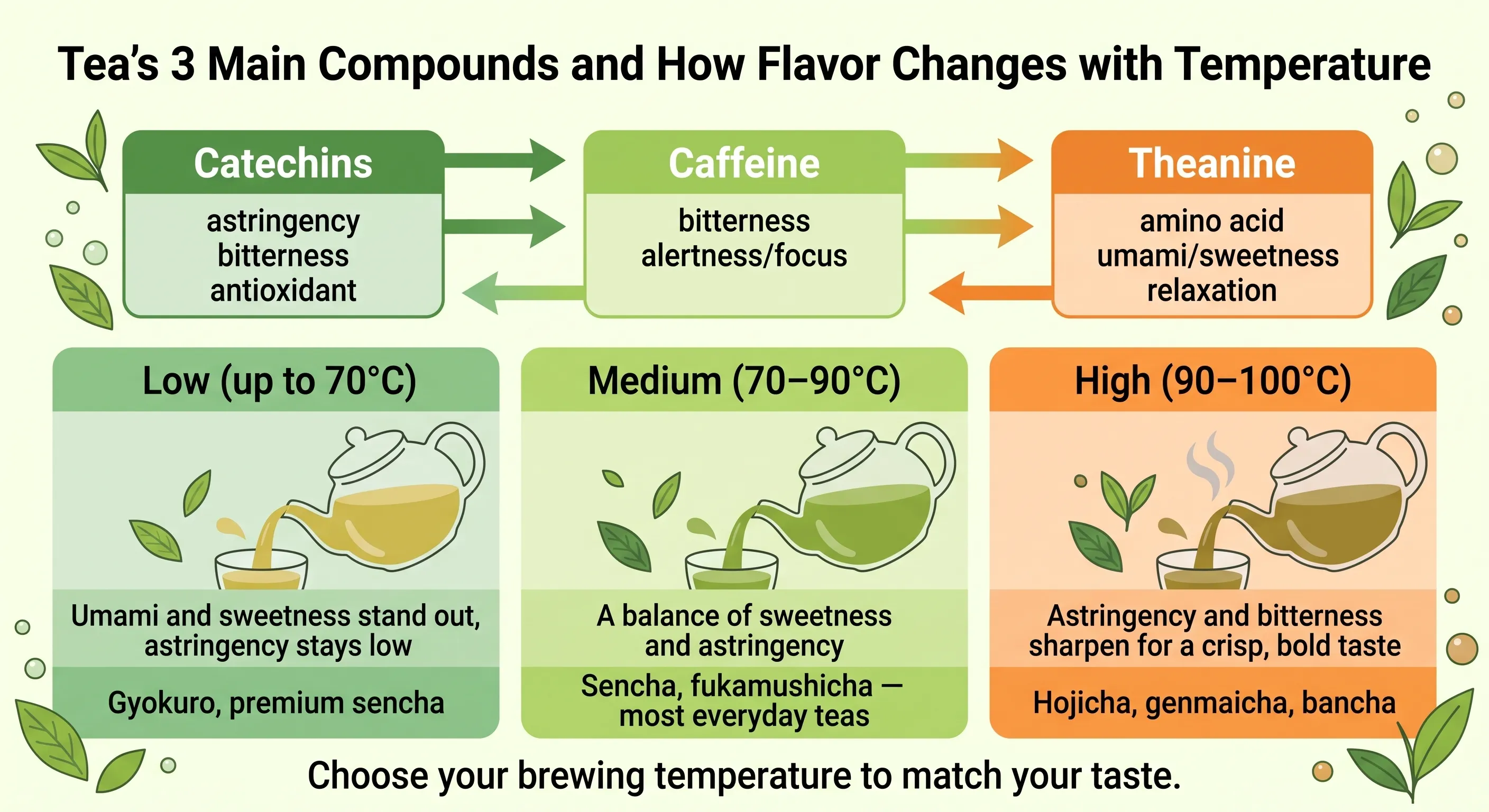
The balance between these three creates tea's astringency, umami, and bitterness — and that balance shifts depending on the brewing temperature. As a Shizuoka tea specialty shop that works with tea every single day, we're breaking it all down in plain terms.
Catechins: The Source of Tea's Astringency
That astringent bite you notice in a cup of tea comes from catechins — a type of polyphenol that green tea contains in abundance.
Catechins share a key trait: the hotter the water, the more of them dissolve out. That's why tea brewed with boiling water tastes more astringent, while tea brewed with cooler water comes out mellower.
Caffeine: The Energy Behind Tea's Bitterness
Caffeine sharpens focus and wards off drowsiness. What sets tea's caffeine apart is that, paired with theanine, it acts more gently than the caffeine in coffee.
Approximate Caffeine per 100ml of Beverage
*Approximate figures for standard brewing, based on Japan's Standard Tables of Food Composition. Actual values vary with leaf quantity, steeping time, water temperature, and product.
⚠️ If You're Watching Your Caffeine
If you'd like to avoid caffeine altogether, a caffeine-free drink like mugicha is your best option. Genmaicha and hojicha are often lower in caffeine than sencha, but they do still contain some. Cold-brew and ice-brew green tea also tend to extract less caffeine than brewing with hot water, though not down to zero. If you want to avoid caffeine entirely before bed, mugicha is the safer choice.
→ How to make cold-brew green tea (Japanese)
💊 If You Take Medication
Some medications can interact with tea's compounds. Always take medication with plain water, and check with your doctor or pharmacist if you have concerns.
Theanine: The Source of That "Settled" Feeling
Ever noticed how a cup of tea can leave you feeling calm and settled? Theanine is thought to be part of that — an amino acid especially characteristic of tea, and also the source of its umami and sweetness.
There's research linking theanine to a relaxed state — for instance, Nobre et al. (2008) found that L-theanine intake increases alpha-wave activity in the brain. Studies have also looked at how theanine combined with caffeine affects attention and mood. The distinctive "calm yet clear-headed" feeling associated with green tea, quite different from coffee, may come from this balance of compounds.
That's why a cup between tasks at work or study can feel like such a natural reset.
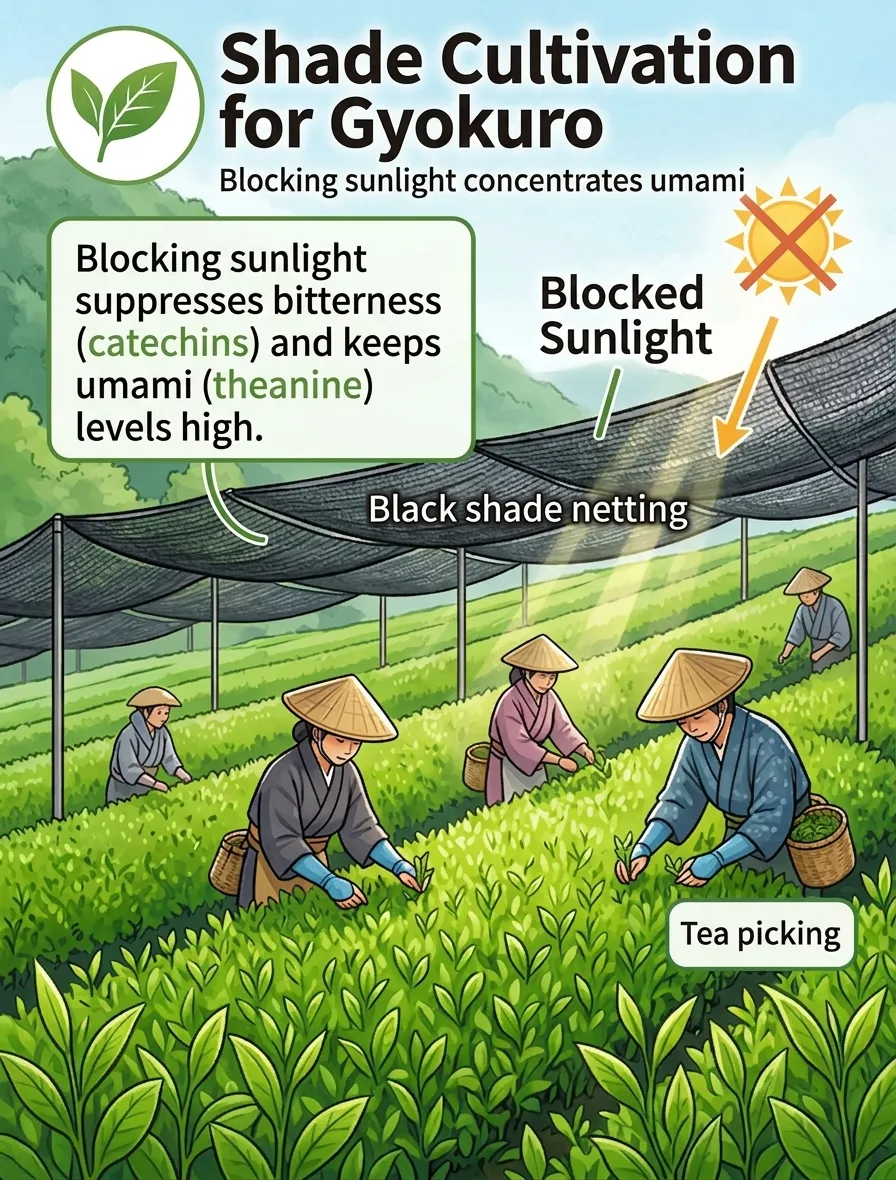
Blocking sunlight to protect umami
Vitamins & Minerals: Why Green Tea Is Called "Nutrient-Rich"
Beyond its three main compounds, green tea contains a range of other nutrients — making your everyday cup a surprisingly rich drink.
| Compound | Characteristics |
|---|---|
| Vitamin C | Normally heat-sensitive, but green tea's catechins help protect it — so you still get vitamin C even from a hot cup. It tends to be higher in sun-grown sencha, and lower in shade-grown gyokuro and matcha, and roasted hojicha. |
| Vitamin E & Beta-Carotene | These don't dissolve into hot water, so a regular steeped cup misses out. Drinking the whole leaf, as with matcha or powdered tea, gets you the full amount. |
| Fluoride | Tea contains fluoride; rinsing with tea is a long-standing traditional habit. |
| Potassium | A mineral involved in the body's fluid and electrolyte balance. |
| Saponins | The compound behind the light foam that forms when tea is poured. |
| Dietary Fiber | Hard to get from a steeped cup alone, but easily obtained by consuming the whole leaf via matcha or powdered tea. |
→ Browse our powdered tea (Japanese)
How Temperature Changes What You're Drinking
Even with the same leaves, the water temperature determines which compounds dissolve out — and that changes the entire character of the cup.
🌡️ Low (up to 70°C)
Theanine (umami, sweetness) dominates, keeping astringency in check. Mellow and sweet. Best for gyokuro and premium sencha — though brewing cool doesn't remove the caffeine, so keep that in mind in the evening.
☕ Medium (70–90°C)
A balance of umami and astringency. Most everyday teas — sencha, fukamushicha, kukicha, konacha — fall in this range.
🔥 High (90–100°C)
More catechins and caffeine dissolve out, for a brisk astringency and pronounced aroma. Hojicha and genmaicha bring out more aroma when brewed at this higher end.
→ See our temperature and time chart by tea type
A Few Things to Keep in Mind
· Publicly available food composition data on caffeine content
· Nobre, A.C., Rao, A., & Owen, G.N. (2008). L-theanine, a natural constituent in tea, and its effect on mental state. Asia Pacific Journal of Clinical Nutrition, 17(Suppl 1), 167-8.
· Further published research on theanine's relationship to relaxation, and on theanine-caffeine combinations
Note: This article draws on the public information and research cited above, compiled by the Minorien editorial team. Compound figures are approximate for standard brewing and vary by product and brewing conditions. Sources on catechin's interactions with iron and medication are listed on our catechin page.

 Shop
Shop