The World of Tōcha
Last updated: August 2026
← Read Chapter 1: How Tea Transformed Edo
A quick reference for the four terms that come up most. A few more specialized terms are explained where they first appear in the text.
- Tōcha
- The competitive tea-tasting game that flourished in medieval Japan.
- Honcha / Hicha
- "Authentic tea" (originally Toganoo, later Uji) versus everything else, however fine.
- Basara
- The flamboyant, extravagant aesthetic of certain 14th-century warrior lords.
- Shishu-jippuku-cha
- "Four teas, ten cups"—the standard tournament format of tōcha.
From Medicinal Tonic to Mind Game: The Origins of Tōcha
When the Zen monk Eisai returned from Song-dynasty China in the late twelfth century, tea was introduced primarily as a medicinal tonic—famously prescribed to cure a Kamakura shogun's lingering hangover. Yet as cultivation spread and distinct regional characteristics emerged in the leaves, identifying different teas evolved into an intoxicating sensory competition that swept through medieval society.
The game assumed different names depending on who played it. Among the flamboyant basara samurai📖, medieval matches were known broadly as chakabuki—a name that, centuries later, would resurface attached to a very different, more formalized practice (more on that in Chapter 5). In the refined salons of court aristocrats and Zen prelates, the game was called kaicha. In gambling circles, it picked up the moniker ponpi, a term thought by some to originate from the binary judgment of genuine and non-genuine teas.
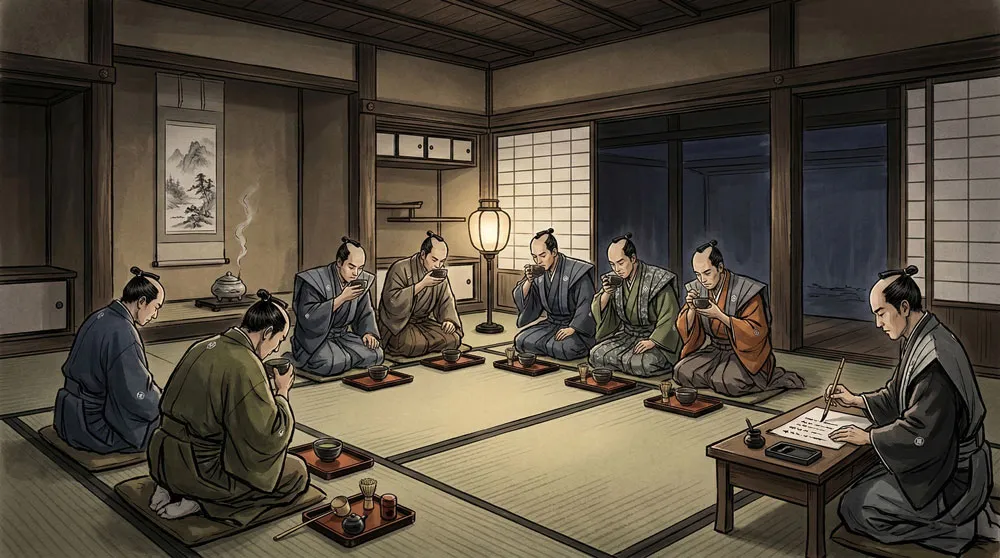
Within the contest itself, success depended heavily on sensory skill and memory rather than formal rank. Once the bowls were served, social rank could not substitute for a trained palate; victory belonged to sensory acuity and deductive reasoning. For warrior lords, courtiers, and merchants alike, that in-room purity of competition was part of the appeal.
- Basara
- A cultural ethos that flourished during the Nanboku-chō and early Muromachi periods (14th century). Embracing ostentation, bold self-expression, and a refusal to bow to traditional authority, figures like Sasaki Dōyo hosted opulent tōcha matches in open defiance of shogunal edicts.
- Ponpi
- A colloquial gambling term associated with tea betting, though its precise etymological origins remain debated among historians.
- Kaicha
- The term favored in aristocratic and monastic circles, emphasizing refined connoisseurship over high-stakes wagering.
- Chakabuki
- Note this is a different, later usage from the medieval term above. In the mid-Edo period, the same name was given to one of the "seven exercises" (shichijishiki) formalized within the Omotesenke and Urasenke tea schools. While it echoes the spirit of the medieval tasting games, it is an aesthetic discipline rather than a gambling match.
The Great Divide: Honcha versus Hicha
The game rested on a rigid hierarchy: to medieval connoisseurs, tea was divided strictly between the genuine article and everything else.
The original gold standard was Toganoo, in the misty hills northwest of Kyoto, where the revered monk Myōe planted tea seeds brought from Song China. Blessed with fertile soil and morning mists, Toganoo yielded a deep, richly concentrated brew that claimed the exclusive title of honcha📖 ("authentic tea"). All other teas, no matter how carefully produced, were dismissed as hicha📖 ("non-authentic tea"). Yet with the rise of the Muromachi shogunate, this brand hierarchy shifted politically. Shogun Ashikaga Yoshimitsu threw his patronage behind the newly cultivated plantations of Uji, designating the "Seven Famous Tea Gardens of Uji" and establishing Uji as the new realm of honcha—a vivid demonstration of how tea prestige and political power were inextricably linked.
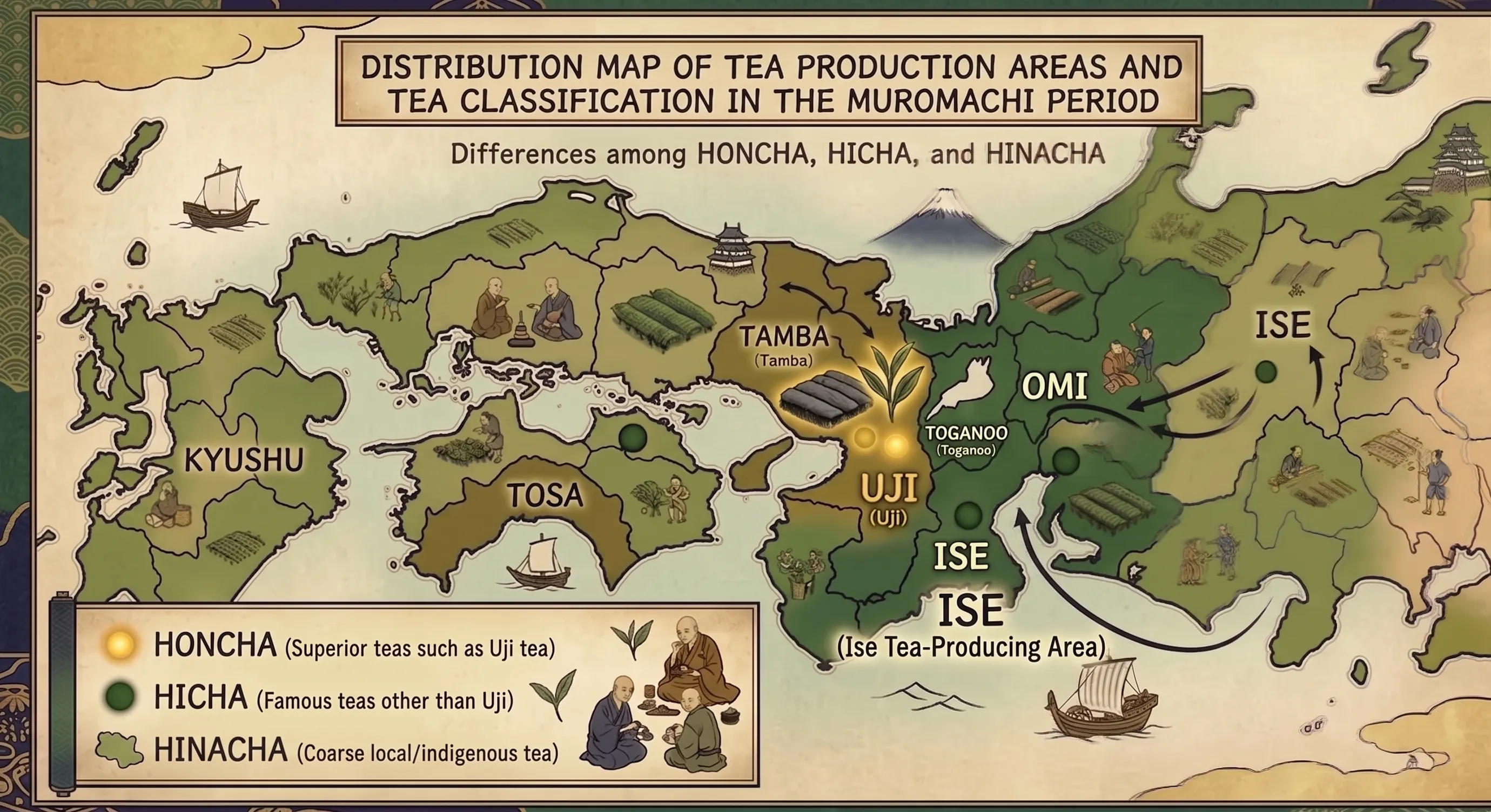
The distribution of tea-producing regions and the honcha / hicha / hinacha classification during the Muromachi period.
| Category | Primary Regions | Historical Context |
|---|---|---|
| Honcha (Early Era) | Toganoo (Kyoto) | The sacred origin site consecrated by the monk Myōe. Its mountain climate yielded deep sweetness and umami. |
| Honcha (Muromachi Era) | Uji (Kyoto) | Flourished under the direct patronage of Shogun Ashikaga Yoshimitsu through the "Seven Gardens of Uji," cementing Uji's enduring supremacy. |
| Hicha (Suburban Teas) | Ninna-ji, Daigo, Hamuro, and surrounding Kyoto estates | High-quality harvests cultivated near the capital, yet classified as "non-authentic" within the strict medieval hierarchy. |
| Hinacha (Provincial Teas) | Musashi Kawagoe, Ise Kawai, Suruga Kiyomi, and regional provinces | Regional teas originally labeled "rustic," though advancing cultivation techniques gradually improved their standing. |
The Rules of Engagement: Shishu-Jippuku-cha
The most celebrated format of competitive tōcha was shishu-jippuku-cha📖 ("four teas, ten cups")—a rigorous test of sensory memory and logical deduction. While historical records note variations in regional practice, the core tournament structure followed a precise sequence.
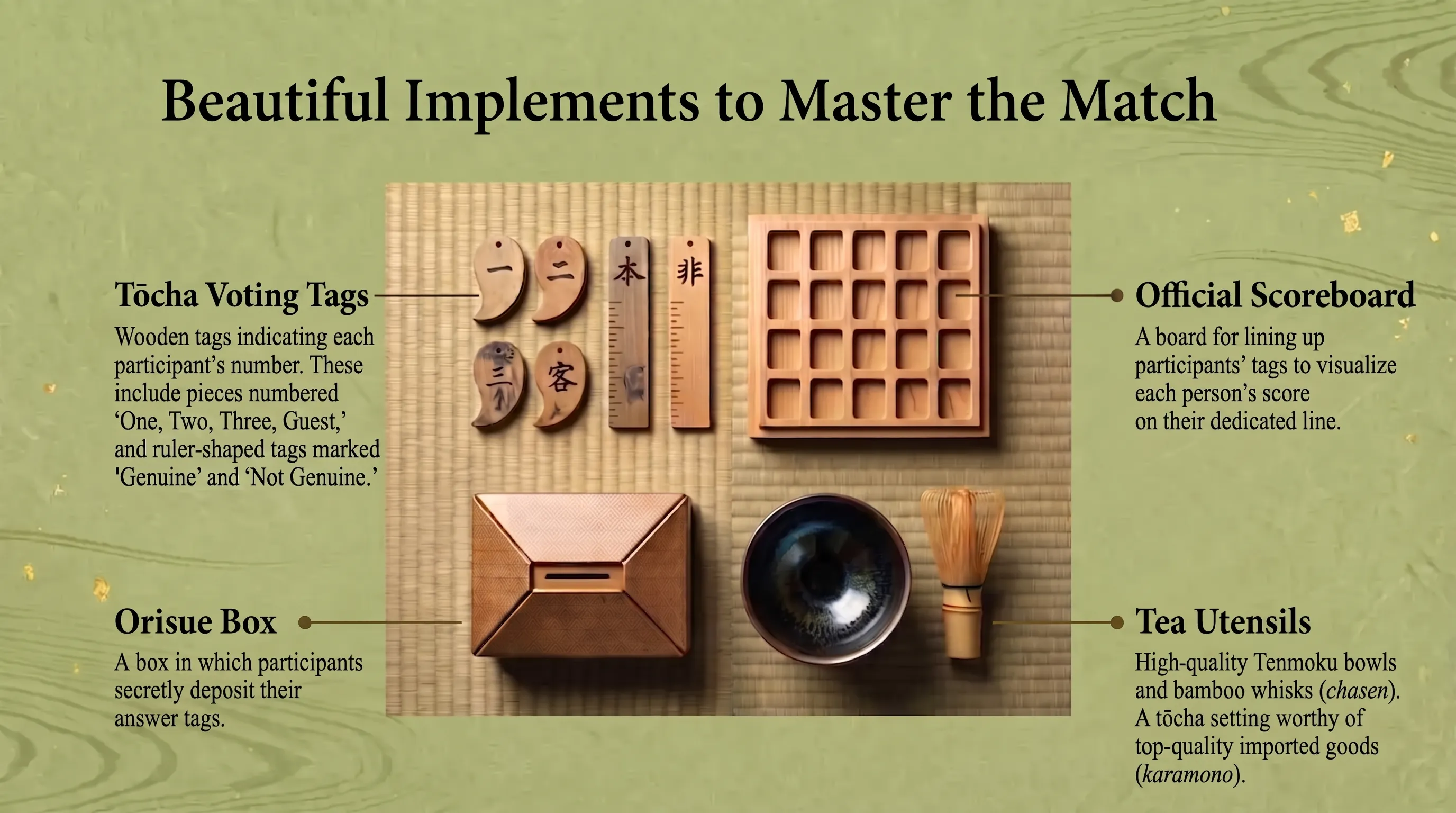
The ceremonial implements of tōcha (from left to right): voting tags (One, Two, Three, Guest, Genuine, Not Genuine), the scoring board (shikiban), the origami voting box (orisue), and the tenmoku tea bowl.
Three reference teas—labeled One, Two, and Three—are served sequentially. Contestants must memorize their aroma, color, astringency, and aftertaste. Every subsequent decision hinges entirely on this baseline.
Ten bowls are prepared and served in random order. Nine of these are the reference teas (each poured three times), while the tenth is the unannounced "guest tea" (kyakucha)—a variety players have never tasted before.
After tasting each bowl, players deduce its identity and place a numbered wooden token into the folded orisue box. Once cast, a token cannot be retrieved or altered.
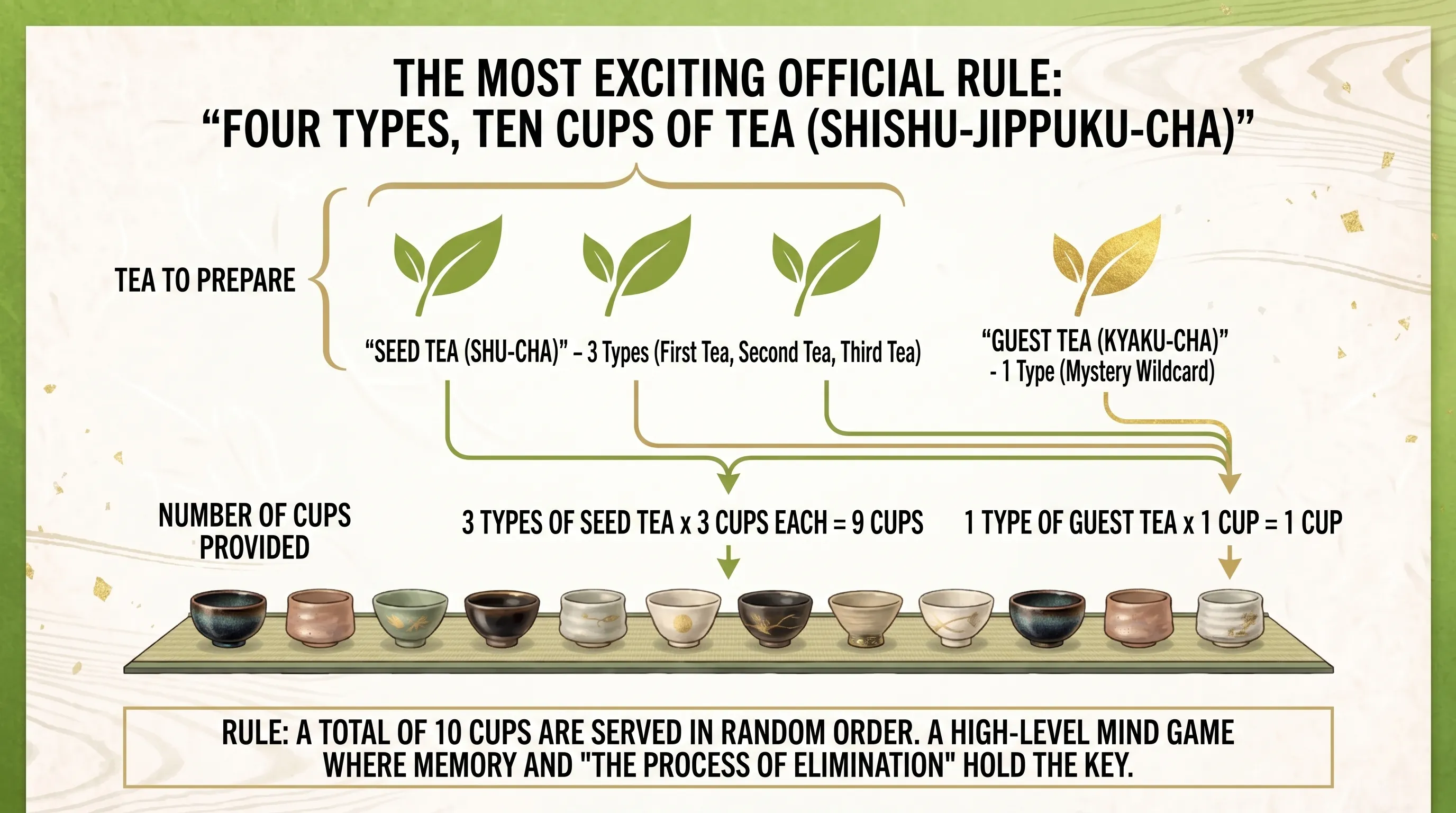
The mathematical structure of shishu-jippuku-cha: three known reference teas served three times each (9 cups) plus one untasted guest tea (1 cup), making ten cups in total.
The brilliance of the game lies in deduction by elimination. "I have already identified all three servings of Tea No. 1; therefore, this unfamiliar aroma must be the guest tea." It was this marriage of sensory focus and game theory that gave tōcha its enduring intellectual allure.
For true fanatics, matches escalated into endurance marathons known as hyappuku-cha ("one hundred cups"), requiring sustained concentration over a long sequence of tastings that could stretch through the night. At dawn, the final scoreboards were unsealed for a dramatic reckoning.
Kaiten and Chotto: The Verdict and the Basara Stakes
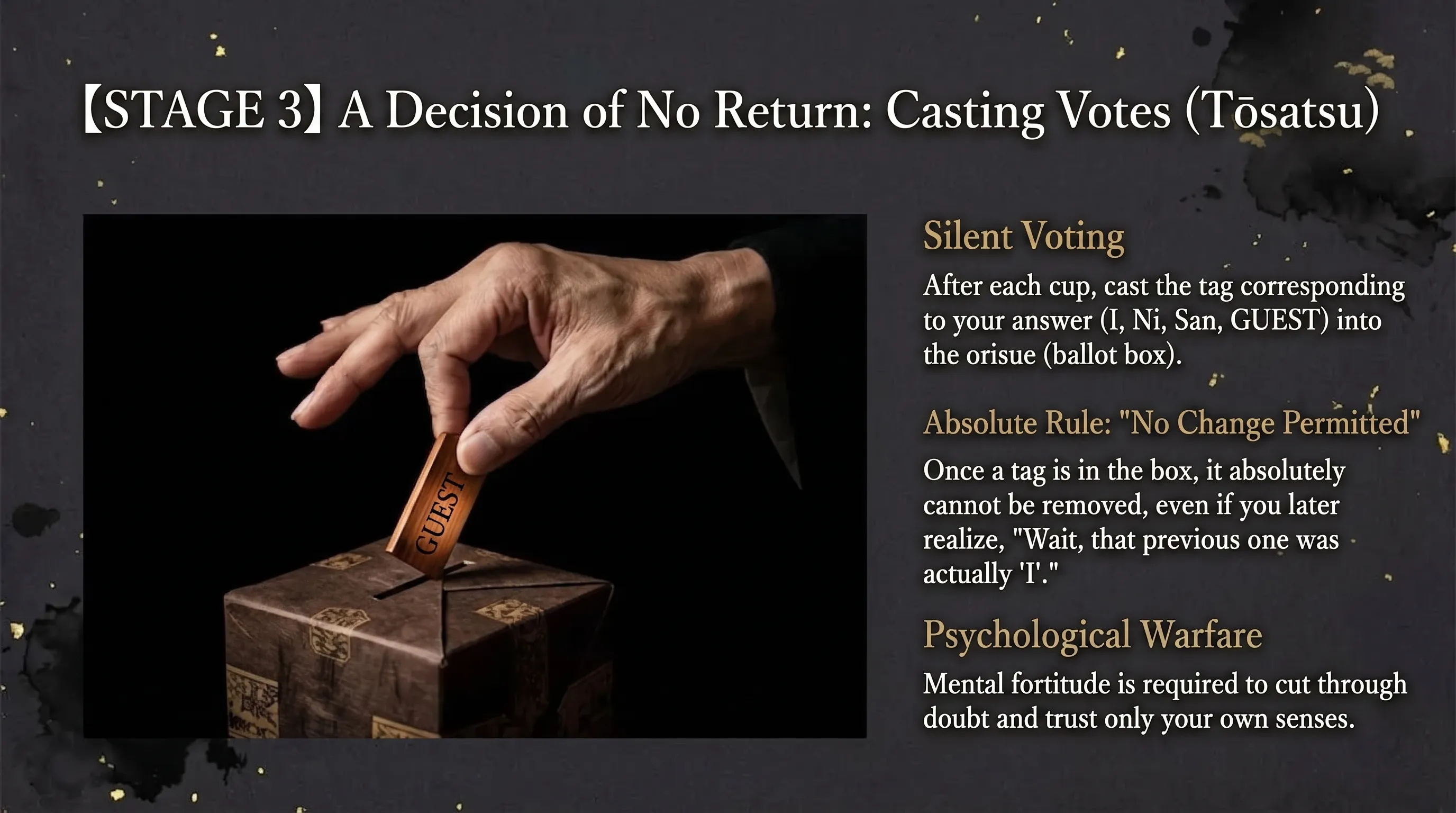
The decisive moment: slipping a "Guest" token into the orisue box. Once dropped, the decision is sealed.
When the tallies were revealed, the outcomes were announced using distinctive medieval terminology:
A flawless sweep of all ten cups. Celebrated as the pinnacle of connoisseurship, achieved only by masters with impeccable sensory discipline.
A perfect result was known as kaiten, while zero correct answers earned the wry, self-deprecating verdict chotto—softening the sting of defeat.
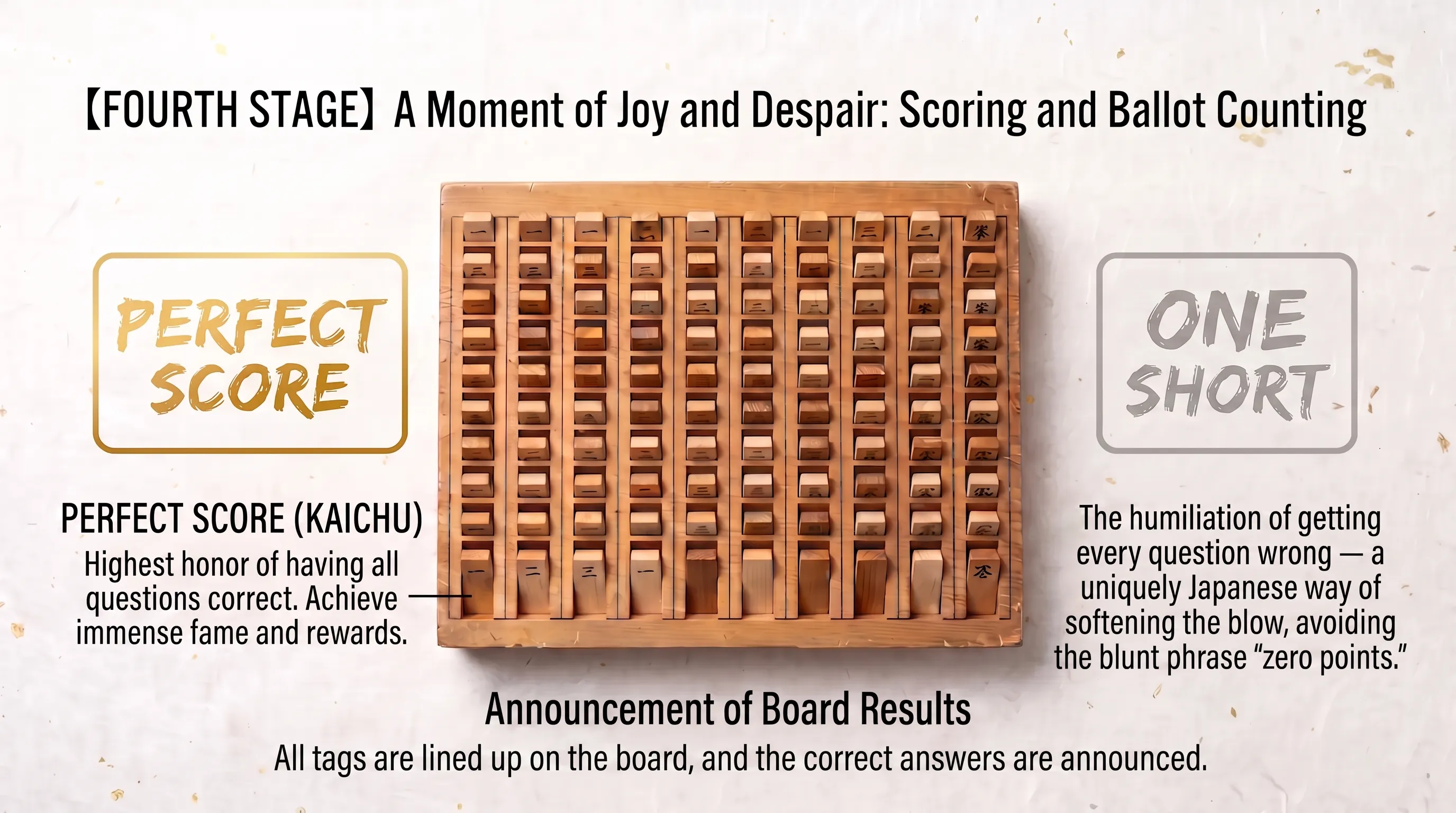
The moment of truth: tokens laid out on the scoreboard. Golden markers celebrate a perfect kaiten, while chotto signifies a total miss.
The material wealth staked on these verdicts was staggering. The 14th-century chronicle Taiheiki famously describes an opulent gathering hosted by the quintessential basara lord Sasaki Dōyo. The venue was divided into three adjoining pavilions: the first was a dazzling prize gallery overflowing with imported bronze censers, silk brocades, master-crafted samurai armor, and gold bullion; the second was a banquet hall serving hundreds of rare delicacies and vintage sake; and the inner sanctum was the hushed arena where the tasting duels took place.
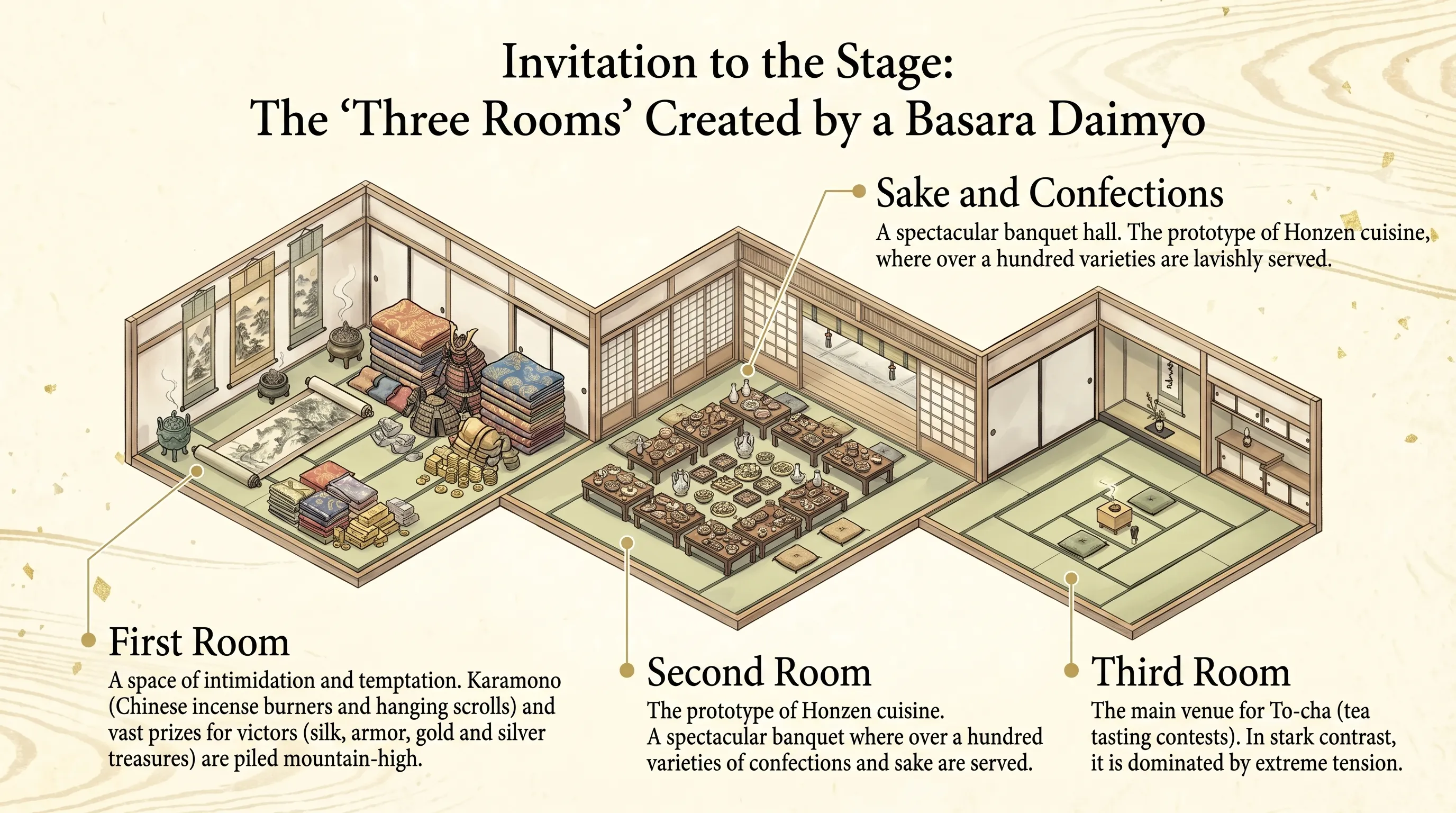
The three-room layout of a tōcha gathering staged by the basara daimyo Sasaki Dōyo: transforming high-stakes competition into grand performance art.
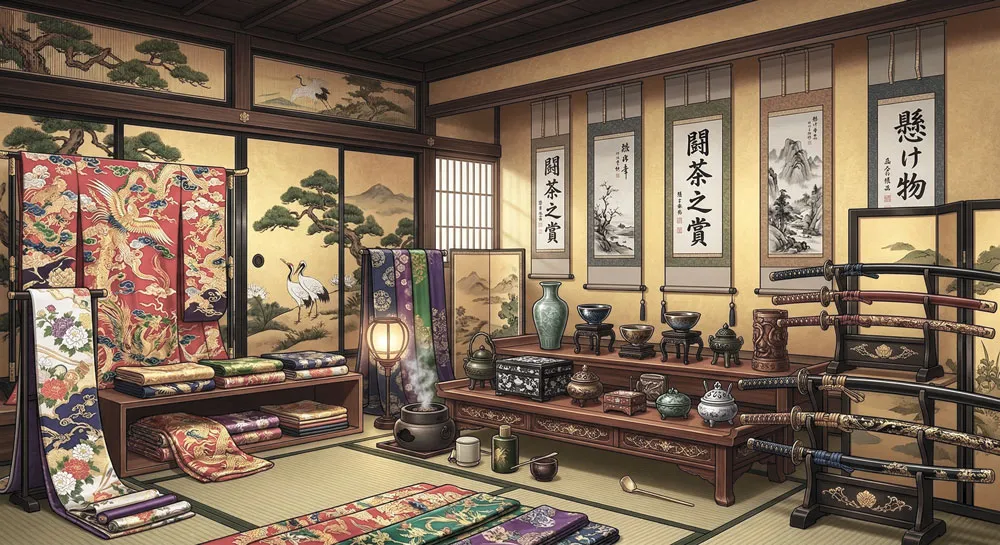
Chinese art objects (karamono), heirloom swords, and silk robes laid out as wagers for medieval tōcha.
In 1336, the first Muromachi shogun, Ashikaga Takauji, explicitly outlawed tōcha in the Kenmu Code (the foundational constitution of his regime). That tea contests warranted direct prohibition alongside rampant gambling suggests that the authorities viewed the associated wagering and extravagance as a serious social problem.
The Living Legacy: From Tōcha to the Modern Palate
As tea culture matured into the refined discipline of chanoyu (the formal tea ceremony), the competitive instinct behind tōcha did not disappear—it was refined. In the mid-Edo period, that instinct was given new form in an exercise that borrowed the old name chakabuki: an elegant tea-tasting ritual practiced among masters to sharpen the palate rather than win wagers.
The sensory thrill of tōcha lives on today. Its spirit survives in later traditions of Japanese tea connoisseurship, including national tea-appraisal competitions (chashinsa-gijutsu taikai), professional tea master certifications, and blind-tasting festivals held in historic tea towns every spring. Seven centuries later, the instinctive joy of identifying a leaf's origin remains recognizable.
The next time you enjoy a quiet bowl of green tea, pause to observe its nuances. Is the flavor crisp or vegetal? Does the finish lean sweet, savory, or mineral? Where in the mist-covered mountains was it harvested? The moment you ask these questions, you share a direct connection with the medieval masters who once wagered everything on the mystery of a single cup.
Why Tōcha Matters Today
Historically, tōcha combined sensory skill, competition, display, and, at times, serious gambling—it was never just one thing. But we can choose to recover one quieter element of that tradition: close attention to what is actually in the cup. In an era overwhelmed by digital noise and secondhand opinions, trusting your own senses to discern what you're tasting is a small, rare art. Step away from distractions, pour a fresh cup, and give it your undivided attention. The quiet focus at the center of tōcha begins right there.
Put Your Palate to the Test
The simplest way to understand tōcha isn't to gamble on tea—it's to taste it with attention. Try brewing two Japanese green teas side by side and notice the differences.
· Historical accounts of tōcha, honcha/hicha classifications, and the shishu-jippuku-cha format in medieval Japanese tea culture
· The Taiheiki and other chronicles describing basara-era tōcha gatherings
· Archaeological findings from the Kusado Sengen-chō site, Hiroshima Prefecture
· The Kenmu Code (1336) and its prohibitions on tōcha and related gambling
· Records of chakabuki within the Omotesenke and Urasenke tea schools
Note: This article is based on historical research, interpreted and contextualized by the Minorien editorial team. Some scene descriptions are illustrative rather than verbatim.
 Shop
Shop